

Table of Contents
For a wardrobe, start with the colour rendering index rather than the wattage: look for CRI 90 or better, in warm white 3000 K or neutral white 4000 K. Allow about 600 lumens per square metre, and spread that light along the rail and down the shelves instead of hanging one fitting in the middle of the ceiling.
A badly lit wardrobe does not give itself away by being dark. It gives itself away on the doorstep, when the jumper you took for navy turns out to be black. That is a lighting problem, not a storage problem. This guide deals first with the part almost nobody measures, colour rendering and the shadows your shelves cast, before moving on to lumens, to placement, and to the walk in wardrobe ideas that need no wiring at all.
Why you pick the wrong colour in a wardrobe
Two faults explain nearly every bad surprise, and neither of them is cured by a brighter bulb.
The light cannot give back a colour it never emitted
A white light does not necessarily contain every wavelength of the spectrum. If deep red or blue is missing from the light, it will be missing from the fabric too: a colour cannot be reflected if it was never emitted in the first place. Two garments that look identical under your ceiling light then separate clearly in daylight at the front door. Colourists call this metamerism.
The shadows your shelves cast
A single point of light in the middle of the ceiling throws the shadow of every shelf onto whatever sits under it, and your own shadow onto the rail as soon as you reach in. The bottom stacks stay dark, and so does the back row of a deep run of storage. Your eye then reads a shade that is darker and flatter than the real one. A single point fails for the opposite reason under a high ceiling, where it is simply too far away: see our guide to vaulted ceiling lighting.
Greens and blues are the least stable of all: a khaki turns brown under a light that is too warm, a sage goes grey under one that is too cool. Our guide to what colour goes with green shows how far a single family of shades travels with the light falling on it.
CRI, the number that decides whether you see the true colour
The colour rendering index, written CRI or Ra, compares the way a source shows a set of colour samples with the way a reference light shows them: a glow close to a flame below 5000 K, daylight above. Marked out of 100, it comes from the International Commission on Illumination, which averages eight samples of moderate saturation.
| CRI | What you see in a wardrobe | Where you find it |
|---|---|---|
| 80 | Strong colours read fine, dark shades merge: navy against black, chocolate against bottle green | The EU legal minimum since 2021 |
| 90 | Dark shades separate, beiges and greys keep their undertone | The level we recommend for a wardrobe |
| 95 | Very close to daylight, worth it if you match two fabrics or sew | The best integrated LEDs |
Since 1 September 2021, the EU ecodesign regulation has required most light sources to reach at least 80: 80 is a legal floor, not a performance. At 80, strong colours read fine but dark shades merge. In a wardrobe, where you judge a colour at arm’s length, we aim for 90.
Our advice: that average leaves out saturated red, which is measured separately and reported as R9, so two sources both rated 90 can still show a red differently. On a fitting with an integrated LED the index is a property of the product and is printed on the spec sheet. On a fitting that takes a bulb it depends on the bulb you put in it, and our guide to LED bulbs shows where to read that figure on the box.
3000 K or 4000 K: the right white for a wardrobe
Colour temperature, in kelvins, says whether the light leans yellow or blue. It does not replace the CRI: a light can be perfectly neutral and still render colours badly. The two figures are read together.
| Colour temperature | Effect on clothes | In a wardrobe |
|---|---|---|
| 2700 K | Yellows whites, flattens dark blues into black | Avoid when you are choosing an outfit |
| 3000 K | Warm, and faithful as soon as the CRI reaches 90 | Our choice in a wardrobe open to the bedroom |
| 4000 K | Neutral white, the best at separating dark shades | Our choice in a closed wardrobe or a dedicated room |
| 5000 to 6500 K | Bluish, office light, grey complexion in the mirror | No |
The rule fits in one sentence: above 4000 K you see accurately but the space turns cold, while around 3000 K with a CRI of 90 you see accurately and the room still feels like home. The European Commission’s scientific committee on health, environmental and emerging risks reported in 2018 that everyday LED lighting shows no evidence of direct harm, and that light rich in blue in the evening can shift the body clock and delay sleep. In a wardrobe that opens off the bedroom, that is one more argument for the warmer of the two whites.
The point most people miss: keep the same colour temperature on every source in the wardrobe. Two different whites side by side wreck any comparison between two garments, and the gap jumps out on a pale door front. The same clash shows up on a hall wall, which is never seen in daylight at all: see our guide to hallway paint colours.

How many lumens does a wardrobe need
I.S. EN 12464-1 asks for 200 lux in changing rooms: a circulation level, where you get changed without matching an outfit. To judge a colour, we suggest 300 lux.
The method is the one in our guide to how many lumens do I need: lumens to fit = floor area in m² × target lux × 2, the factor of two covering what the fitting and the room surfaces lose. At 300 lux that comes to 600 lumens per square metre.

A 2 m² reach in wardrobe therefore needs about 1,200 lumens, a 4 m² walk in wardrobe about 2,400, and a 6 m² dressing room about 3,600. Add 20% if the doors are mid toned and 40 to 50% if they are dark: a charcoal wardrobe swallows light. Those lumens are shared between every source in the room; they never come out of one fitting. Energy is not what decides here, by the way: 2,400 lumens of LED draw roughly 20 W, about the same as a single old pearl bulb that lit the space far worse.
Where to put the light: ceiling, mirror and hanging rail
This is the second half of the problem. The right quantity of light, badly placed, leaves exactly the same areas in shadow.
A round ceiling light is the wrong shape
A round fitting in the middle of a walk in wardrobe lights the floor and leaves the shelves in shadow. A batten fixed to the ceiling, set 30 to 40 cm out from the back wall so that it sits above the front edge of the shelves, lights clothes from the front instead of skimming them from above. Those long formats are gathered in our bar ceiling lights.

Vertical wall lights, for the mirror and for you
A downlight above a mirror digs out the shadows under your eyes and leaves your chest dark. Two vertical sources on either side of the glass light your face and the front of your clothes with no cast shadow: that is the fitting room principle, and it is the single most useful idea in this guide. Centre them at eye level, around 1.6 to 1.7 m, roughly 70 cm apart, and pick a design with a diffuser rather than a bare strip of diodes. Our LED wall lights include the slim vertical profiles that suit this job.
The rail, the shelves and the shoe niches
Under a high shelf, a short batten or an LED strip light run along the front edge, behind a small baffle, lights the rail without glaring. At the front, not at the back: a strip stuck against the back wall lights the wall, not the clothes. Recessed spots or puck lights do the job in shoe niches and in a chest of drawers, as long as you keep the same CRI and the same colour temperature as the rest of the room. In a shallow built in closet, a single source at the front of the top shelf often lights the whole thing.
Wiring, heat and the Irish rules
A wardrobe is a dry space, so IP20 is enough. Fixed wiring follows the National Rules for Electrical Installations, I.S. 10101. Safe Electric classes a new circuit or a new fixed installation as Restricted Electrical Work, which only a Registered Electrical Contractor may carry out and certify, while swapping a fitting like for like on an existing point does not fall into that category. Our advice: leave a few centimetres between any source and the nearest garment, and choose LED over halogen, which runs far hotter in a closed space.
Wardrobe lighting with no wiring, no cable or on a sensor
Plenty of fitted wardrobes have no ceiling point at all, and chasing a wall for one is rarely worth it. Three answers, from the quickest to the most permanent.
- On batteries, with no cable at all. Rechargeable battens and puck lights, magnetic or screwed, go up in ten minutes. Their limits are run time and, very often, an unpublished CRI: read the spec sheet, or you land straight back on the problem you started with. Our guide to battery operated wall lights covers what lasts and what does not.
- Off a socket you already have. An LED strip or a plug in wall light needs no electrician and no damage to the wall. Run the flex inside the carcase rather than across the back panel, and it disappears.
- Automatically. A motion sensor light or a door contact turns the wardrobe on as you open it and off on its own. It is also what makes a battery last a season rather than a fortnight, because the light only runs while you are standing there.
If your wardrobe or your hot press is still lit by an old fluorescent batten that blinks before it strikes, the fault is often a part that costs a couple of euro. Our guide to testing a fluorescent light starter tells you whether to repair the fitting or move to LED, whose colour rendering you get to choose.
Frequently asked questions about wardrobe lighting
What is the best type of lighting for a wardrobe?
A linear fitting rather than a single round ceiling light: a batten set 30 to 40 cm out from the back wall, backed up by two vertical wall lights at the mirror and a light at the front of the hanging rail. Aim for 600 lumens per square metre, in 3000 K or 4000 K, with a colour rendering index of 90 or better.
Which LED light is best for a wardrobe?
One that publishes its colour rendering index: 90 at the very least, 95 if you match fabrics or sew. For a run of shelves, a fitting with an opal diffuser spreads the light far more evenly than spots do. An integrated LED states its index on the spec sheet; a fitting that takes a B22 or E27 bulb is only as good as the bulb you put in it.
What kind of lighting is best for closets?
In a shallow built in closet, one source at the front of the top shelf does most of the work, because it lights the full depth without being blocked by the shelf above. Add a door contact or a sensor so it comes on by itself, keep it at IP20 since the space is dry, and leave a few centimetres between the fitting and the nearest garment.
How do you light a wardrobe with no wiring?
Three options, none of which needs an electrician: rechargeable battens or puck lights that stick or screw under a shelf, an LED strip or a plug in wall light run off a socket you already have, or a portable lamp set on a shelf. Check the colour rendering index of battery models before buying, as it is often left off the spec sheet.
What colour temperature is best for a wardrobe?
Neutral white 4000 K in a dedicated room or a closed wardrobe: it is the white that best separates navy from black. Warm white 3000 K if the wardrobe opens onto the bedroom, so the light matches the rest of the room. In both cases the colour rendering index matters more than the kelvins, and every source should share the same white.
How do you make wardrobe lights come on automatically?
With a motion sensor at the entrance of a walk in wardrobe, or a door contact switch that lights a fitted unit as the door opens and cuts it as it closes. Both exist as wired versions, to be connected to the lighting circuit by a Registered Electrical Contractor, and as self contained battery versions that need no wiring at all.
Sources
- CIE 13.3-1995, Method of Measuring and Specifying Colour Rendering Properties of Light Sources. The eight samples behind the index, with saturated red reported separately as R9. International Commission on Illumination
- CIE S 017, ILV: International Lighting Vocabulary. Definitions of metamerism and of correlated colour temperature. International Commission on Illumination
- Regulation (EU) 2019/2020 on ecodesign requirements for light sources. Minimum colour rendering index of 80 for most light sources (Annex II, Table 4), applicable since 1 September 2021. European Union
- I.S. EN 12464-1, Light and lighting, Lighting of work places, Part 1: Indoor work places. 200 lux in changing rooms. National Standards Authority of Ireland
- Opinion on potential risks to human health of light emitting diodes. 2018 review of LED lighting and of evening exposure to blue rich light. Scientific Committee on Health, Environmental and Emerging Risks, European Commission
Related products

LED batten ceiling light, 90 cm, 3 finishes
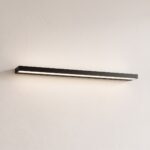
LED batten wall light, 67 cm, 3 finishes
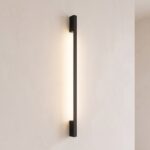
Vertical LED wall light, 120 cm, 3 finishes
See also

Mood Lighting: The Three Settings That Really Create It, Room by Room

How to Change Spotlight Bulbs, With or Without a Clip

Conservatory Lighting: Which Lights Cope With the Heat, the Glass and the Dark
