
Table of Contents
In a conservatory, fix your lights to the glazing bars, the ring beam or the house wall, never to the glass. After dark the glass returns only reflections, so choose lights that shine downwards rather than a ceiling light glowing in every direction, and allow about 40% more lumens than in a closed room of the same size.
A conservatory or sunroom is furnished like a living room and lit like no other space in the home. You cannot drill its walls, the air under its roof overheats in summer, and at night its glass shows the room instead of the garden. In Ireland that last point matters most: in late December the sun sets around four o’clock in Dublin, against nearly ten at the end of June, so your conservatory lighting does most of its work in the months when the glass is black.
Where to fix a light in a conservatory
A conservatory has almost nothing you can drill. The glass is out in every case: toughened glass shatters if it is drilled after toughening, a hole weakens laminated roof glass, and a pierced double glazed unit loses its seal and mists up between the panes. A polycarbonate roof can be drilled, but every hole becomes a leak the first time the rain comes in sideways.
Many Irish conservatories stand on a low brick dwarf wall, with glazing bars running from the house wall to the ring beam on top of the frames. That leaves four places to fix a light:
| Where | What it takes | Watch out for |
|---|---|---|
| Glazing bar | Spotlights, a spot bar, a light pendant | The plastic cover underneath carries nothing: unclip it and screw into the metal of the bar |
| Ring beam and corner posts | Wall lights, adjustable spots | Make sure no sliding door track or roller runs behind |
| House wall | Anything, including an off centre pendant | The one wall that sends light back: keep it for lights that bounce light into the room |
| Dwarf wall, floor, furniture | Low wall lights, lamps, rechargeable lights | A socket on the dwarf wall is far easier to add during the build |
The evenly spaced glazing bars give you a ready-made grid for spreading the light. Our six-spot bar weighs 1.65 kg, a load a glazing bar takes without fuss; a heavy metal pendant belongs on the house wall or a structural beam. Under a steep roof, the height changes from one end of the room to the other, and the reasoning is the one in our guide to vaulted ceiling lighting: the higher the fixing, the further the light has to come down.
If your glass roof has been replaced by a solid, insulated one, as in many Irish homes, a plastered ceiling takes downlights like any other room. The walls are still glass, though, and the reflections below still apply.
After dark, the glass turns into a black mirror
This is what nobody expects when they buy a conservatory. Glass always sends back a small share of the light that hits it. By day you never notice, because the garden is far brighter than the reflection. At nightfall the balance flips, and the glass shows you the room.

What reflects is the bright surface, not the fitting. A shade that hides the bulb shows up as a soft patch. A bare filament bulb or a clear globe shows up as a dazzling point, and the glass doubles them: four bare bulbs make eight bright points in your line of sight. Under a slatted or woven pendant, an opal bulb in place of a clear one takes the glare away for a few euro.
The reflection fades when the outside is no longer black. It is the only fix that works on the cause. A little light on a hedge, a tree or the patio makes the glass see-through again, and the conservatory opens onto a garden that still exists at night. Our guide to outdoor lighting goes through it zone by zone; you need very little, aimed at the ground and the planting.
Then turn it down. A dimmable fitting on an LED dimmer that suits it cuts the reflections along with the brightness.
A conservatory needs more lumens than a closed room
In an ordinary room, about half of what your bulbs give out ends up lighting something useful, because the walls and the ceiling send back what they receive. A conservatory has neither: at night a pane of glass returns a mirror image, not diffused light, and everything aimed at the roof goes outside.

So we treat a conservatory like a room with dark walls, the strongest correction in our guide to how many lumens you need: 40% more on the lumens to fit. A 15 m² conservatory used for dining, at 150 lux, needs 2,250 useful lumens: 4,500 lumens to fit in a closed room with pale walls, about 6,300 here. Used as a sitting room at 100 lux, it needs about 4,200.
Spread that total over three or four conservatory lights that work downwards: a ceiling light with a diffuser sends part of its output up, and under glass that part is lost. For the sitting room, our six-spot bar with 450 lumen G9 LEDs gives 2,700 lumens, two wall spots with 450 lumen GU10s add 900, and a floor lamp with an 806 lumen bulb brings the total to 4,406.
Summer heat under glass: what light fittings can take
An indoor light fitting is designed for air at 25 °C, the default in I.S. EN 60598-1, the standard for luminaires: above that, the maker must say so with a ta marking. A south-facing conservatory with no blinds goes well past it on a sunny afternoon, Irish summer or not, and the hot air gathers at the top of the roof, right where the roof lights are. Heat spares the shade but shortens the life of the electronics: LED driver, transformer, dimmer.
- Protect the room, not the fitting. Roof blinds or solar control glass cool the whole conservatory, the only measure that deals with the cause.
- Prefer a replaceable bulb. A fitting with an E27, B22, GU10 or G9 lampholder is repaired with a bulb costing a few euro; an integrated LED that gives up after three summers is replaced whole. If it is a GU10 spot that has gone dark, our guide on how to change spotlight bulbs shows how to get the old one out cleanly.
- Keep natural materials out of direct sun. Fabric, paper, rattan and plant fibre fade and dry out in a season or two, and plastic diffusers yellow. Put them on the house wall side, metal and ceramic elsewhere.
Cold, on the other hand, does not bother an LED. The damp that comes with it does.
Which IP rating for a conservatory?
An outdoor light is rarely needed: a heated, properly closed conservatory is a dry room, where an ordinary IP20 fitting is fine.
The unheated sunroom is another story. On a winter night the glass drops below the dew point, and moisture settles on it, runs down the panes and into the channels of the frame. In an Irish winter, damp far more often than frosty, that happens night after night, and a fitting under the roof can catch the drips. The IP code of I.S. EN 60529 measures exactly this: its second digit runs from 1, drops falling straight down, to 4, water splashing from any direction.
- Heated, insulated, used all year: IP20 throughout.
- Unheated, or heated now and then: IP20 on the house wall and for lamps, IP44 for anything fixed under the glass roof.
- Doors left open all summer: IP44 throughout, connection boxes included.
The two digits, and how the IP code differs from the IK impact rating, are explained in our guide to IP ratings. A Class II fitting, double insulated, needs no earth, while a Class I fitting must go on a point that has one.
Getting power to the lights without touching the glass
A well built conservatory comes with its wiring planned: the frames have cable channels behind their clip-on covers, which is why the roof spots are wired during the build, not after.
Electrical work in Ireland follows I.S. 10101, the National Rules for Electrical Installations published by NSAI, which require an RCD on lighting circuits in homes. A new circuit for the conservatory, or any change at the fuse board, is Restricted Electrical Work under S.I. No. 264 of 2013: only a Registered Electrical Contractor listed with Safe Electric may do it, and they give you a completion certificate. An extra light point on an existing circuit must still meet I.S. 10101, and we would have the same registered electrician do it.
With no supply in the roof, three solutions avoid drilling:
- The off centre pendant. Run the flex from an existing light point to a hook in a glazing bar and let the light drop where you want it, as our guide to the off centre pendant light explains.
- Plug-in lights. A lamp on a console, a string of lights along a glazing bar, a plug-in wall light on the house wall.
- Rechargeable lamps on the table or near the plants, as mood light, never as the main light.
Conservatory lighting ideas for every use
The conservatory dining room. The easiest to get right, because the table gives you the pale surface the room is missing. Hang the pendant with its bottom about 60 cm above the table top: the light lands on the plates, below where the glass reflects most. On a table 75 cm high, that is 1.35 m off the floor, so under a glazing bar at 2.45 m a pendant with a maximum height of 110 cm gets there exactly, and under the highest part of the roof it will not. Our wooden pendant lights give that maximum height, flex included, on every product page: compare it before the diameter.
The conservatory sitting room. Here a central ceiling light is the worst reflex. Combine three or four low sources: a wall light on the house wall, a lamp by the armchair, one or two spots aimed at a wall. Adjustable wall lights with switch are the most useful, because you aim them once you see how the room reflects, and turn them on from the chair. The same three or four low sources are what makes good mood lighting in any room of the house.

The garden room for plants. If the plants are the point, light them, not the roof. A narrow beam aimed down onto the leaves draws shadows on the floor and gives depth that general light never does. Adjustable spot ceiling lights suit it, with narrow beams rather than wide ones, which mostly light the glass behind the plant.
Whatever the use, keep the light warm. A conservatory is always compared with the light outside, and cool white looks artificial there at once: stay at 2,700 K, with 3,000 K over the table at most. Our guide to warm white vs cool white explains why the difference shows so much in the evening.
Frequently asked questions about conservatory lighting
How do you put a light in a conservatory?
Fix it to the metal of a glazing bar, the ring beam or the house wall, never to the glass or the plastic covers. A new circuit is work for a Registered Electrical Contractor; without one, an off centre pendant, plug-in lamps and rechargeable lights need no drilling.
Can you put spotlights in a conservatory roof?
Not in the glass. A standard GU10 downlight needs more depth than a glazing bar has, so recessed spots only work with slim LED spots made for that roof system, or under a solid roof with a plastered ceiling. Otherwise, a spot bar screwed to a glazing bar does the same job without cutting.
What is the best lighting for a conservatory?
Several low sources that shine downwards rather than one ceiling light: a pendant over the table, adjustable spots, a lamp by the chair, all in warm white at 2,700 K and dimmable if possible. A little light outside stops the glass turning into a mirror.
Do you need outdoor-rated lights in a conservatory?
Not in a heated, properly closed conservatory: it is a dry room, and IP20 is fine. Choose IP44 in an unheated sunroom for anything fixed under the glass roof, where condensation runs in winter, and throughout if the doors stay open all summer.
How high should a pendant hang over a conservatory table?
About 60 cm between the bottom of the shade and the table top, as elsewhere in the house. Under a sloping roof, measure the height at the fixing point, then check the maximum height, flex included, on the product page. The lower it hangs, the less it shows in the glass.
Can a lamp replace the sun for conservatory plants in winter?
No decorative fitting can: daylight is counted in thousands of lux, up to a hundred thousand in full sun, a lit room in hundreds. Grow lights come closer, and their output is measured in micromoles per second, not lumens. In Ireland the question arises mainly from November to February.
Sources
- I.S. 10101, National Rules for Electrical Installations, summary of key changes (RCDs on lighting circuits in domestic premises). NSAI and Safe Electric
- Restricted and Controlled Electrical Works, definitions under S.I. No. 264 of 2013 (new circuits, distribution boards). Safe Electric
- I.S. EN 60598-1, Luminaires, general requirements and tests (rated ambient temperature ta, 25 °C unless marked). NSAI
- I.S. EN 60529, Degrees of protection provided by enclosures (IP code). NSAI
- Wintergarten and Esszimmer, Lichtanwendungen Wohnen (glass surfaces act as mirrors in the dark; pendant about 60 cm above the table). licht.de
Related products

Ceiling light, 6 adjustable pencil spots, 100 cm
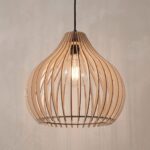
Pendant light, drop-shaped wood slats, 40 cm
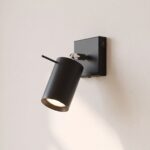
Adjustable spot wall light with switch, 2 colours
See also

Mood Lighting: The Three Settings That Really Create It, Room by Room

How to Change Spotlight Bulbs, With or Without a Clip

Conservatory Lighting: Which Lights Cope With the Heat, the Glass and the Dark
