

Table of Contents
A terracotta bedroom works when you get three choices right: terracotta on one or two walls rather than everywhere, warm neutrals and natural materials to soften it (sand, off-white, wood, linen, rattan), and a warm white light around 2,700 K with good colour rendering, so the colour turns neither bright orange nor dull brown.
Terracotta means “baked earth” in Italian: it is the colour of clay pots, quarry tiles and old Mediterranean roofs. It reacts strongly to light: the same paint looks bright orange under a very warm bulb and flat rust under a cool one. In an Irish bedroom, where the midwinter sun sets around four o’clock, your bulbs decide how it looks most of the time.
Is terracotta a good colour for a bedroom?
Yes, with restraint. Terracotta is an earthy orange brown that copies the tone of fired clay, a colour that comes from the iron oxides in the clay, which turn red in the kiln. Warm but not very saturated, it makes a bedroom intimate and inviting, never harsh.
Start with touches: bedding, a throw or a light fitting. The wall behind the bed is the safest place for paint: it frames the bed, the other three walls stay light and the room keeps its brightness. A painted lower half of the wall, or an arch behind the headboard, creates a feature without closing the room in. Keep a fully painted room for light terracottas or large, bright bedrooms: in a small box room, deep terracotta everywhere feels smaller and darker.
A light, pinkish or dusty terracotta suits small bedrooms and children’s rooms; a rich, deep terracotta, closer to brick or rust, suits a large main bedroom. North-facing, the cooler daylight calms it; south or west-facing, the afternoon sun makes it more orange, so choose a muted shade. Before you paint, test a large sample and look at it morning, afternoon and evening, under your own bulbs.
What colours go with terracotta in a bedroom?
Terracotta needs a light neutral to balance its warm tones and one contrasting note so it does not turn monochrome. Here are our reference colours, with their codes:
- Sand beige, #DCC7A9: terracotta and beige is the softest pairing, for bedding, curtains and the rug.
- Off-white, #F2EDE4: choose it over brilliant white, which looks bluish next to terracotta and makes the contrast harsh.
- Honey oak, #A98460: terracotta and wood is the most natural match, in oak, light walnut or teak furniture and flooring.
- Sage green, #9CAA8A: a greyed green that freshens terracotta without a hard contrast, in a throw, an armchair or plants.
- Midnight blue, #2F3A4F: opposite orange on the colour wheel, it makes the room more graphic, in small doses.
Our reference for terracotta itself is #C4673F, a mid terracotta that turns dusty pink as it gets lighter and brick red as it gets darker.

Against terracotta walls, keep the bedding light: washed linen or cotton in off-white, oatmeal or sand. A rust or ochre throw gives a tone-on-tone look, and a sage or midnight blue cushion adds the accent.
Materials that suit terracotta: wood, linen, rattan and ceramic
Terracotta sits well with raw, natural materials, which also change the way light behaves. The oiled wood of a bed frame or bedside table carries the warmth of the wall. Crumpled linen in off-white, sand or terracotta relaxes the room, and linen curtains filter daylight. Rattan and woven fibres are the base of a boho terracotta bedroom: at night, a woven pendant casts a textured halo on the walls. Matt ceramic repeats the material of terracotta itself, and brass makes it glow where chrome cools it down. A jute rug on a wooden floor adds textures underfoot.
On the wall, choose a flat matt emulsion or a limewash. A matt finish diffuses light and gives terracotta its earthy depth; a satin or eggshell finish throws back the reflections of your lamps and makes each light source look more orange.
Terracotta and light: keeping the true colour in the evening
After dark, two figures decide how your terracotta looks: the colour temperature, in kelvins (K), and the colour rendering index (CRI).
Colour temperature: 2,700 K for the evening
The lower the number, the warmer and more golden the light. An amber light around 2,200 K, the light of decorative filament bulbs, adds its own orange to the wall’s, and terracotta turns bright orange. At 2,700 K, the shade of old incandescent bulbs, it stays warm and true: the setting to remember. At 3,000 K it looks a little crisper, a good compromise if the bedroom doubles as a home office. From 4,000 K, the red loses its warmth and terracotta drifts towards a greyish brown.

Keep the same colour temperature for every light in the room: a 2,700 K wall light next to a 4,000 K ceiling light shows at once on a coloured wall. Soft, warm light also suits the hours before sleep. In 2022, sleep and circadian researchers published consensus recommendations that advise keeping light low in the evening, from at least three hours before bedtime, and the bedroom as dark as possible during sleep.
CRI: the number that protects red
The CRI rates, from 0 to 100, how faithfully a light renders colours. Since 1 September 2021, the EU ecodesign regulation for light sources has required a CRI of at least 80 for most indoor lighting in Ireland as across the EU. That figure, written Ra, is the average of eight fairly pale test colours; saturated red has its own index, R9, which is not part of the average. A CRI 80 bulb can therefore have a low R9, often why terracotta looks brown and lifeless. Our advice: choose LED bulbs with a CRI of 90 or more, and a positive R9 when the packaging or product page gives it.
Several light sources and a dimmer
One powerful ceiling light flattens the wall: use two or three lower sources instead. A dimmer switch lowers the brightness at bedtime, but an ordinary LED keeps its colour temperature when dimmed: it does not warm up like an old incandescent bulb, unless the bulb is sold as “dim to warm”.
Which lights suit a terracotta bedroom?
A fitting in brass, white ceramic or rattan stands out against a terracotta wall. A terracotta fitting shows best on a light wall; on a terracotta wall it blends in, and its light does the work.
At the headboard: wall lights and bedside pendants
Our biscuit-shaped wall light, in terracotta aluminium, stacks three rounded shapes in a body of 16.3 × 33.6 cm, and its light spills over the wall: it is a mood light, which lights the wall rather than your book. Our terracotta wall light collection offers it in other colours too. To read in bed, add an adjustable model: our guide to reading lights for bed helps you place it. If there is no wiring point above the bed, adding one is a job for a Registered Electrical Contractor, working to the Irish wiring rules, I.S. 10101.
Or hang a pendant low on each side of the bed. The fluted terracotta tube, 8 cm across, sends its light downwards, onto the bedside table and the bedding, without glare. An opal glass globe on a fluted terracotta mount gives a softer glow. You will find both in our terracotta pendant light range.

On the ceiling: chandelier or ceiling light
A compact terracotta ceiling light, or several in a row, stays discreet and directs the light downwards: our terracotta chandelier collection includes slim fluted cylinders 6.5 cm across. To size it for your room, see our guide to choosing a bedroom ceiling light. Check the cap before you buy a bulb: many Irish homes use the B22 bayonet in their ceiling pendants and lamps, while our terracotta fittings take G9 or GU10 bulbs, as our B22 bulb guide explains.
| Zone | Light fitting | Role | Bulb |
|---|---|---|---|
| Headboard | Decorative wall light | A glow of mood light on the wall | 2,700 K, CRI 90 |
| Bedside | Reading light or bedside pendant | Reading, directed light | 2,700 K, narrow beam |
| Ceiling | Ceiling light or chandelier | Tidying, getting dressed | 2,700 or 3,000 K, on a dimmer |
| Reading corner | Table lamp or directed ceiling light | Extra light in the evening | 2,700 K |
5 terracotta bedroom ideas and styles
The light rules stay the same in every style: warm, from several points and lower in the evening, as in any home designed around cosy lighting.
The boho terracotta bedroom
A terracotta wall, a rattan headboard, crumpled linen, a jute rug and plants. Overhead, a woven fibre pendant on the ceiling and, by the bed, a wall light in orange enamelled ceramic with a glass globe.
The minimalist terracotta bedroom
One light terracotta wall, the rest off-white, pale oak and very few objects: a warmer take on Japandi style. Two fluted beige ceramic wall lights either side of the bed keep the light soft and free of glare.
The Mediterranean terracotta bedroom
Limewashed walls, terracotta floor tiles or a warm wooden floor, white linen, touches of blue and olive green, an arch painted behind the bed, and a simple, warm light for a rustic, sun-baked feel.
The modern terracotta bedroom
Deep terracotta, midnight blue accents, brass and clean lines. Terracotta tube pendants and a cylinder ceiling light shape the wall with directed beams.
The soft terracotta bedroom, for a child or a baby
Light terracotta or dusty pink on the lower half of the wall, with beige, off-white and pale wood above. Light it with diffused warm white sources and a very dim night light, out of the child’s line of sight, as in our guide to kids bedroom lighting.
Terracotta bedroom: frequently asked questions
Is terracotta a good colour for a bedroom?
Yes. Warm and not very saturated, terracotta makes a bedroom intimate and inviting. To keep it restful, use it on the wall behind the bed or in touches, surround it with warm neutrals, and light it in the evening with warm white around 2,700 K.
What colour bedding goes with terracotta walls?
Linen or washed cotton in off-white, sand or oatmeal: they lift a terracotta wall without competing with it. A rust or ochre throw adds a tone-on-tone warmth; sage green and midnight blue work as accents on cushions.
What is a complementary colour to terracotta?
Strictly speaking, blue: it sits opposite orange on the colour wheel, and a midnight or navy blue gives terracotta a smart, graphic contrast. Sage or olive green makes a softer pairing, over a base of warm neutrals such as off-white, beige and wood.
Is terracotta an outdated colour?
No. It has recently had a revival as a trend colour, but it is above all a traditional earth colour, the colour of fired clay, used in homes for centuries. Paired with natural materials and warm neutrals rather than passing accessories, it ages well.
Which colours should you avoid with terracotta?
Cold grey and brilliant white on large surfaces, which make terracotta look harsh, and black on a large scale, which weighs the room down. In lighting, avoid cool white at 4,000 K and above, under which terracotta turns brown and dull.
What bulb should you use in a terracotta bedroom?
A warm white LED at 2,700 K with a colour rendering index of 90 or more and, when the product page gives it, a positive R9. Check the cap too: many Irish homes use the B22 bayonet, while our terracotta fittings take G9 or GU10 bulbs. With a dimmer, choose a bulb marked dimmable.
Sources
- Terracotta, encyclopaedia article: fired clay, iron oxides and the colour they give. Wikipedia
- Commission Regulation (EU) 2019/2020 of 1 October 2019 laying down ecodesign requirements for light sources, applicable from 1 September 2021 (minimum colour rendering index). European Union
- CIE 13.3-1995, Method of Measuring and Specifying Colour Rendering Properties of Light Sources (Ra index and test colours, including R9). International Commission on Illumination
- Brown T. M. et al., Recommendations for daytime, evening, and nighttime indoor light exposure to best support physiology, sleep, and wakefulness in healthy adults, PLOS Biology, 2022. doi.org
- Home Safety: always use a Registered Electrical Contractor for electrical works. Safe Electric
Related products

Design aluminium biscuit-shape wall light, 10 colours
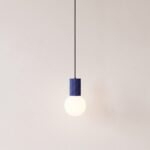
Minimalist coloured pendant light, fluted aluminium and glass

Minimalist terracotta pendant light for a warm atmosphere
See also

Teal Bedroom Ideas: Colours, Gold Accents and the Right Light for a Dark Wall

Downstairs Toilet Lighting: The Right Light for a Small, Windowless WC or Cloakroom

Wabi-Sabi Interior Design: The Beauty of Imperfection, Right Down to the Light
