

Table of Contents
A B22 bulb has a bayonet cap 22 mm across, with two small pins on its sides: you push it into the holder and twist to lock it. It is the standard household bulb fitting in Ireland and the UK. It looks close to the E27 screw cap used across continental Europe, but the two never fit each other’s holder.
Most Irish homes have a B22 lampholder hanging from at least one ceiling rose, which is why “a normal bulb” in Ireland usually means a bayonet one. But modern light fittings, many of them designed for the European market, often take other caps: the E27 screw, the small E14, the GU10 of downlights or the tiny G9. In our own range, 324 fittings take an E27 bulb, 130 a G9, 128 a GU10 and 50 an E14, while 207 have integrated LEDs and no bulb to change at all. This guide shows you how to recognise each fitting in seconds and switch to LED without buying a bulb that does not fit. The same check applies to the wooden and ceramic pendants of a modern farmhouse interior, which often take an E27 bulb.
What is a B22 bulb?
The cap, or base, is the metal part of the bulb that does two jobs at once: it holds the bulb in place and carries the current to the light source. Opposite it, on the fitting, is the lampholder. Both carry the same code, and the codes follow the international standard IEC 60061, which fixes the dimensions of caps and holders. That is why a bulb bought anywhere in Europe fits the holder it was made for.
In the code, the letter gives the type of fixing and the number gives a measurement in millimetres. B stands for bayonet, and 22 is the diameter of the cap. The full name is B22d: the small d means the cap has two contacts on its base, where a single-contact cap ends in s. On packaging you will also see it called BC, for bayonet cap. The bayonet fitting is standard in Ireland, the UK, Australia, New Zealand, India and other countries once linked to Britain, but not in North America or continental Europe.
A bayonet cap does not screw in. You line up its two side pins with the L-shaped slots in the holder, push against the spring and turn it a little to lock it. The spring keeps it pressed in place, which is why bayonet caps do not work loose with vibration, and why they are also used in cars and torches.
B22 and B15: the large and small bayonet
There are two sizes of bayonet bulb in Irish homes. The B22, or BC, is the large one found in pendants, ceiling fittings and most table lamps. The B15, 15 mm across and also called SBC for small bayonet cap, turns up in small lamps, some appliances and older wall lights. A B15 bulb sits loose in a B22 holder, so check the size before you buy.
B22 or E27: what is the difference?
This is the classic mix-up when buying bulbs in Ireland. The E27 is the large Edison screw, or ES: a threaded cap 27 mm across, measured across the peaks of the thread, that screws clockwise into its holder. The B22 is 5 mm narrower and has no thread at all. The two are not interchangeable: a B22 bulb will not go into an E27 holder, and an E27 bulb will not lock into a B22 one.
| B22 (BC) | E27 (ES) | |
|---|---|---|
| Fixing | Push and twist, two side pins | Screws in clockwise |
| Diameter | 22 mm | 27 mm |
| Where it is standard | Ireland, UK and former Commonwealth countries | Continental Europe and China |
| Typical Irish use | Ceiling rose pendants, older fittings, many lamps | Newer designer fittings, imported lights |
In practice you will meet both. The pendant flex from your ceiling rose probably ends in a B22 holder, while a designer pendant or floor lamp bought recently may well take an E27. Neither is better: both come in standard, globe, filament, dimmable and smart bulbs. What matters is to read the fitting before you buy the bulb. The same check applies to a vintage globe pendant from the mid century modern era. Our bulb pendant lights show their bulb, so they are a case where the cap and the bulb shape really count.

How do I identify my light bulb fitting?
You do not need to take the fitting apart. From quickest to surest:
- Read the old bulb. The cap code is almost always printed on the glass or stamped on the metal cap, next to the voltage and wattage, for example “B22 230V 5W”.
- Look at the holder. Two L-shaped slots and a spring mean a bayonet (B). A visible thread means a screw cap (E). Two small holes mean a pin cap (G or GU).
- Measure. For a screw or bayonet cap, measure the widest part of the cap: 22 mm is a B22, 27 mm an E27, 14 mm an E14. For pins, measure from the centre of one pin to the centre of the other, not between their edges. A ruler marked in millimetres is enough.
- Check the product page of the fitting. Every product page in our shop states the bulb cap in its specifications, and whether a bulb is included. It is the safest answer before you buy a spare.
Always switch the light off before removing a bulb, and let a halogen cool for a few minutes first: its glass gets very hot in use.
Screw caps: E27 and E14
Screw caps are the easiest to fit: the bulb turns clockwise until it makes contact, without forcing. The current flows through the small contact at the bottom of the cap and through the thread itself.
E27, the large Edison screw
At 27 mm, the E27 is the standard screw cap for 230 V bulbs in continental Europe, and the one most European-made pendants and floor lamps use. It has the widest choice of bulbs: standard shapes, globes, decorative filament bulbs, smart bulbs and dimmable models. It also takes the brightest household bulbs, which makes it a good choice for the main light in a room.

E14, the small Edison screw
The E14, or SES, is 14 mm across. You find it on fittings where the bulb should stay discreet: wall lights, multi-arm chandeliers, bedside lamps and small mood lights. E14 bulbs come in candle, round and tube shapes that imitate the candles of an old chandelier. Its size limits its output, so it is a cap for atmosphere rather than for the main light: on a chandelier with several arms, it is the number of bulbs that makes the light, not the power of each one.
Pin caps: GU10, G9, GU5.3 and G4
The first question with them is the voltage: some run straight from the 230 V mains, others at 12 V and need a transformer. And their number does not measure a diameter, but the gap between the centres of the two pins.
GU10, the downlight cap
The GU10 has two short pins, 10 mm apart, that end in small feet. You push it in and give it a quarter turn: the feet lock behind the holder, so the bulb stays put even upside down in a ceiling. It runs on 230 V with no transformer. It is the cap of most downlights, spotlight ceiling lights and adjustable wall spots. Fitted with a high-CRI LED, those spots are also the simplest way to light a painting: see our guide to picture lights.

G9, the looped pins
The G9 is easy to spot: its two pins form small loops, 9 mm apart. The bulb pushes straight in with no twist. It runs on 230 V and takes tiny bulbs, which makes it the cap of design wall lights, glass pendant lights and small contemporary chandeliers.
If you are replacing an old G9 halogen capsule, it helps to know the European ecodesign rules gave mains G9 halogen capsules, like low voltage G4 ones, a lower efficiency threshold only until 1 September 2023. Since then they have had to meet the general requirement, which in practice has taken them off the market. Their LED replacement is often a little longer, so check the space inside the shade or glass before you buy.
GU5.3 and G4: the low voltage caps
The GU5.3, used on MR16 spotlights, has round pins 5.33 mm apart. The G4 is a small capsule with straight pins 4 mm apart, common under kitchen cabinets and in display lighting. Both run at 12 V and need a transformer, either built into the fitting or wired before it. Never connect a 12 V bulb to 230 V: it will fail instantly. And when you change these spots to LED, check that the transformer accepts low loads: one made for 35 W halogens can make a 4 W LED flicker.
Bulb fittings at a glance
| Cap | Fixing | What the number measures | Voltage | Where you find it |
|---|---|---|---|---|
| B22 (BC) | Bayonet | Diameter, 22 mm | 230 V | Ceiling rose pendants, lamps, most Irish homes |
| B15 (SBC) | Bayonet | Diameter, 15 mm | 230 V | Small lamps, appliances |
| E27 (ES) | Screw | Diameter, 27 mm | 230 V | European pendants, floor lamps |
| E14 (SES) | Screw | Diameter, 14 mm | 230 V | Wall lights, chandeliers, bedside lamps |
| GU10 | Pins, twist-lock | Pin gap, 10 mm | 230 V | Downlights, spotlights |
| G9 | Looped pins | Pin gap, 9 mm | 230 V | Design wall lights, glass pendants |
| GU5.3 (MR16) | Pins | Pin gap, 5.33 mm | 12 V | Low voltage spotlights |
| G4 | Pins | Pin gap, 4 mm | 12 V | Cabinet and display lighting |
Are B22 bulbs being phased out?
No. European rules do not ban any cap: they ban inefficient light sources. That is why the old filament and most halogen bulbs have gone from the shelves, whatever their cap, while B22 LED bulbs are sold everywhere, in standard, candle, globe and filament shapes, dimmable or not. What has changed is the choice of fittings: many new pendants and lamps are designed for the European market and take an E27. If you are fitting out a new home, it is worth checking the cap of each light, so you do not end up with three different spare bulbs in the press.
Switching to LED without buying the wrong bulb
The good news is that the cap does not change with the technology: a B22 LED replaces a B22 filament bulb, a GU10 LED replaces a GU10 halogen. It is the other details that catch people out.
- Lumens, not watts. An LED uses far less power for the same light, so watts no longer tell you how bright a bulb is. European rules require packaging to show the luminous flux in lumens, in type at least twice as large as the power: compare that figure. Our guide to LED bulbs covers the other figures on the box.
- Dimmers. A non-dimmable LED on a dimmer flickers or buzzes. Look for “dimmable” on the pack, and check that your dimmer switch is rated for LEDs.
- Size. The same cap does not mean the same size: an LED can be longer or wider than the bulb it replaces, especially in G9 and E14.
- The 12 V transformer. With GU5.3 and G4, it is often the transformer that needs changing, not only the bulb.
B22 to E27 adapters
Adapters let you put an E27 bulb into a B22 holder, or an E14 into an E27. They can help out, on two conditions: never exceed the maximum wattage marked on the adapter and on the fitting, and keep them for LED bulbs, which run cool. Avoid them on pendants with a shade, where the adapter lengthens the bulb and moves it out of the centre of the shade. When you replace a fitting anyway, it is simpler to choose one whose cap matches the bulbs you already use, or to go for LED lights with integrated LEDs, which have no bulb to replace at all.
The right habit: read the cap before you choose the bulb, and check the “bulb cap” line on a product page before you buy the fitting.
B22 bulb: frequently asked questions
Are B22 and E27 the same?
No. A B22 is a bayonet cap 22 mm across that you push in and twist to lock; an E27 is a screw cap 27 mm across. They look similar in size but never fit each other’s holder. B22 is the standard fitting in Ireland and the UK, E27 in continental Europe, so check the cap printed on the old bulb or on the product page before buying.
What bulb is B22?
B22 is the large bayonet cap, also called BC or B22d: a smooth metal cap 22 mm across with two small pins on its sides. It is the standard household bulb in Ireland, found in most ceiling rose pendants and many lamps. B22 LED bulbs come in standard, candle, globe and filament shapes, dimmable or not.
Can I use an E27 bulb in a B22 socket?
Not directly: the screw cap cannot lock into a bayonet holder. A B22 to E27 adapter makes it possible, as long as you use an LED bulb, which runs cool, and stay under the maximum wattage marked on the adapter and the fitting. On a pendant with a shade, the adapter lengthens the bulb, so it can sit off-centre.
Are bayonet bulbs being phased out?
No. European ecodesign rules ban inefficient light sources, not caps. Filament and most halogen bulbs have gone, whatever their cap, but B22 LED bulbs are widely sold. What has changed is that many new fittings designed for the European market take an E27, so it is worth checking the cap of each light you buy.
Are there two sizes of bayonet bulbs?
Yes. The large B22, or BC, is 22 mm across and is the one in most pendants and lamps. The small B15, or SBC, is 15 mm across and is used in small lamps, appliances and some older wall lights. They are not interchangeable, so measure the cap or read the code on the old bulb before buying a replacement.
How do you change a bayonet light bulb?
Switch the light off and let the bulb cool. Push the bulb gently up into the holder against the spring, turn it anticlockwise a little until the pins free themselves from the slots, then pull it out. To fit the new one, line its pins up with the slots, push in and turn clockwise until it locks.
Sources
- Commission Regulation (EU) 2019/2020, ecodesign requirements for light sources: definitions of the G4 and G9 interfaces, the efficiency threshold for halogen G9 and G4 capsules until 1 September 2023, and the packaging information on luminous flux. EUR-Lex
- IEC 60061-1, Lamp caps and holders together with gauges for the control of interchangeability and safety, Part 1: Lamp caps. International Electrotechnical Commission
- Bayonet mount: B22d and B15 caps, contact suffixes and where the bayonet fitting is standard. Wikipedia
- Edison screw: E27, E14, E40 and E10 sizes and names. Wikipedia
- Bi-pin lamp base: GU10 and GU5.3 pin spacing and voltage. Wikipedia
Related products
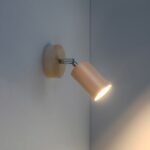
Natural wood adjustable spot wall light

Handcrafted Japandi Natural Fibre Pendant Light
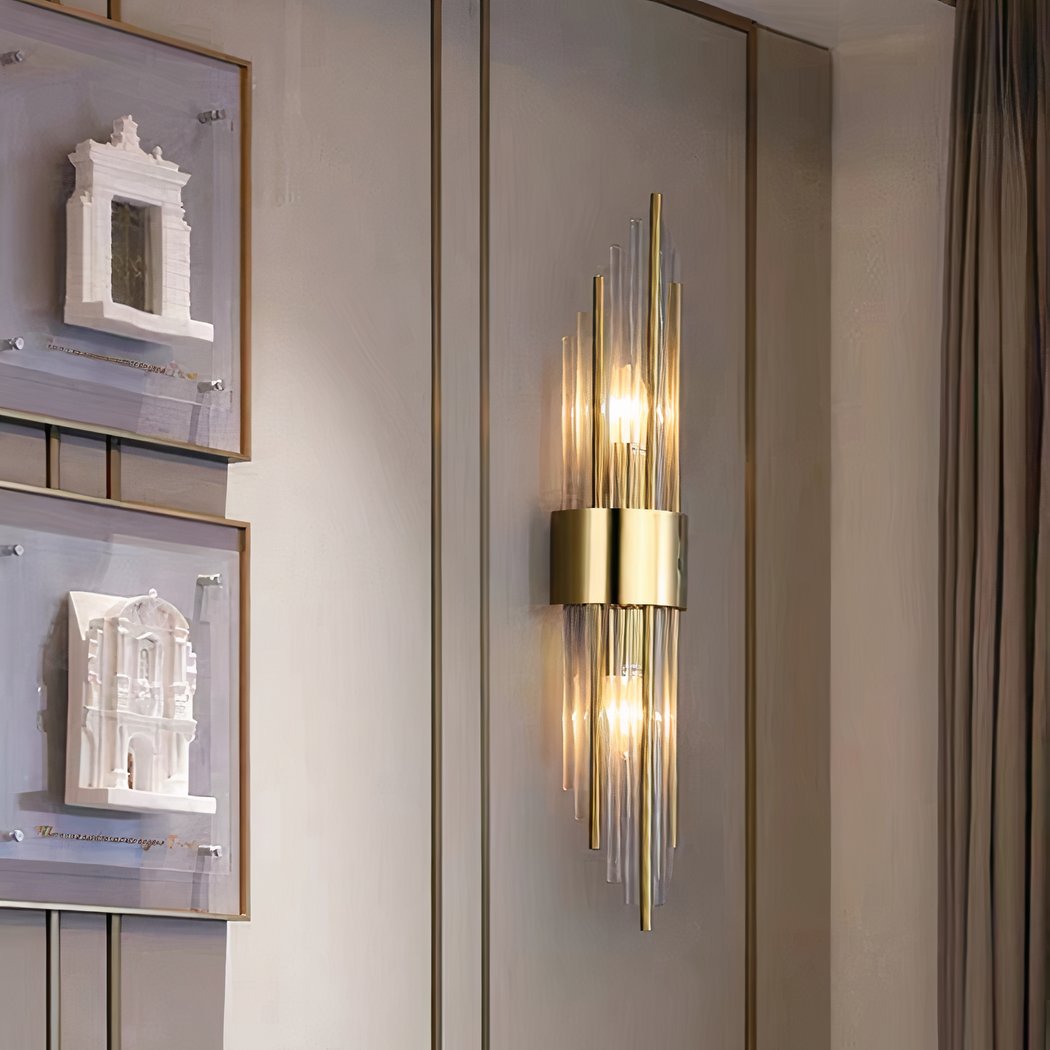
Gold Art Deco style wall light in metal and glass
See also

Teal Bedroom Ideas: Colours, Gold Accents and the Right Light for a Dark Wall

Downstairs Toilet Lighting: The Right Light for a Small, Windowless WC or Cloakroom

Wabi-Sabi Interior Design: The Beauty of Imperfection, Right Down to the Light
