

Table of Contents
To light a child’s bedroom, plan three lights: a ceiling light for playing and tidying up, a lamp by the bed or on the desk for reading and homework, and a very soft night light for the night. Choose warm white, fittings that are firmly fixed and out of reach, and adapt the whole set-up to your child’s age.
A child’s bedroom changes role several times a day: playroom in the afternoon, study at homework time, a cosy den at bedtime story time. A single ceiling light cannot do all of that. This guide helps you choose kids bedroom lights for each moment: the ceiling light, the bedside and desk lamp, the night light, and how to fit them all safely. Our children’s pendant lights and nursery chandeliers cover the ceiling, from playful shapes to the simplest designs.
How to light a child’s bedroom
As in the rest of the house, lighting a child’s room works in layers. Each one matches a moment of the day and is best on its own switch.
| Light | When | Suitable fittings | Remember |
|---|---|---|---|
| General lighting | Play, tidying, getting dressed | Pendant, ceiling light | Diffused, with no bare bulb visible from the bed |
| Reading light | Bedtime story, reading in bed | Reading wall light, bedside lamp | Adjustable, stable, switch within reach |
| Desk light | Homework, drawing | Adjustable desk lamp | On the side opposite the writing hand |
| Night light | Falling asleep, waking at night | Night light, soft wall light | Very dim, warm, out of the line of sight |
If you are rewiring or renovating, this is the moment to put switches and sockets where your child will need them: by the bed and by the desk. A dimmer on the ceiling light lets you turn it down at bedtime; our guide to the dimmer switch explains how to pair one with dimmable LED bulbs.
Kids ceiling lights: which fitting to choose
The ceiling light provides the general lighting. It should light the whole room evenly, for playing on the floor or tidying up, without glare. That is the point to watch in a child’s room: a baby spends a lot of time lying on their back, and an older child often looks straight up at the ceiling from bed. So choose a fitting that hides the bulb, with a shade, an opal globe or a diffuser, rather than a bare bulb.
Pendants shaped like an animal, a cloud or a moon turn the light into part of the decor. Our bear cub pendant light in resin, for example, shows a sleeping teddy on a translucent moon that diffuses a soft light; it is Class II, double insulated, and takes a small G9 LED bulb.
Hang the pendant so that it cannot be reached from the top bunk or a chair, and check that it is securely fixed to the ceiling. Under the current National Rules for Electrical Installations, I.S. 10101, lighting circuits in homes must be protected by a residual current device (RCD), as Safe Electric sets out in its summary of the key changes. Swapping a ceiling fitting like-for-like is minor works, but always switch off at the fuse board first; adding a new circuit, for example for wall lights in a converted attic bedroom, is Restricted Electrical Works for a Registered Electrical Contractor.
Lamps for reading in bed and doing homework
Two targeted lights complete the ceiling light: one by the bed and one at the desk. They do not face the same constraints.
By the bed
For the bedtime story, then for reading alone, the light should fall on the book without dazzling whoever is lying next to it. A wall light has two advantages over a bedside lamp for a child: it cannot be knocked over, and there is no trailing cable. An adjustable reading wall light with a switch on the fitting lets your child switch off alone. Our modern wall light with an adjustable head, in white or black steel, is compact enough to sit above a single bed, and you will find more options among our reading wall lights.
For a softer light that goes with bedtime, a decorative wall light does the job very well. A moon wall light or a backlit wooden disc throws a warm halo on the wall without the bulb being visible.
At the desk
Once homework starts, a desk lamp becomes essential. Choose an adjustable model that lights the page, not the eyes, and put it on the right side: on the left for a right-handed child, on the right for a left-handed child. That way the shadow of the hand falls beside the line being written, not on it.

Keep the ceiling light on during homework: a brightly lit desk in a dark room makes the eyes keep adjusting between the page and the rest of the room. We explain these principles, which apply at any age, in our guide to office lighting.
Night lights for kids: which one to choose
A night light reassures a child who is afraid of the dark and guides their steps to the bathroom at night. The HSE suggests a dim night light for a calm atmosphere, and leaving a night light or the hall light on so that a young child is not upset if they wake in the dark. The catch is that light at night also affects sleep, and children are more sensitive to it than adults. In a study published in the Journal of Clinical Endocrinology and Metabolism, moderately bright light at night suppressed melatonin, the hormone that signals night to the body, by 88.2% in primary school children against 46.3% in adults, and ordinary room light at home suppressed it in children but not in adults. A later study linked this to children’s larger pupils and clearer lenses, which let through more short-wavelength, bluish light.
Hence a few simple rules:
- A warm light, golden or amber, rather than white or bluish.
- A dim light: just enough to make out the door and the furniture, not enough to read by.
- Out of the line of sight: near the floor, behind a piece of furniture or across the room from the bed, so your child does not see it directly from the pillow.
- A timer that switches it off once your child is asleep, if they accept it.

Be wary of very bright light-up gadgets. The HSE advises against mobiles and light-up electronic toys in or near a baby’s cot, as they can disturb sleep during the night. For a night light or a lamp your child handles, portable luminaires for children have their own safety standard, I.S. EN 60598-2-10, published in Ireland by NSAI: it is worth looking for on the pack.
Lighting by age
Needs change quickly, and the lighting can keep up without starting again.
For a baby, the night comes first: a very dim, indirect light for night feeds and nappy changes, one that wakes neither baby nor parents. The HSE recommends a wind-down hour before bed with dimmed lights. Avoid any light source visible from the cot.
From 3 to 6, children play on the floor and often start to be afraid of the dark: a diffusing ceiling light, a warm night light and a switch they can reach on their own. The HSE also advises avoiding screens such as TVs, tablets and phones for an hour before bed at this age.
At school age, the desk lamp and the reading light take over. This is the time to fit a reading light above the bed.
For teenagers, the question becomes screens and late nights more than light fittings. A dimmer and warm bulbs help the evening wind down.
Choosing simple fittings for the ceiling and the desk, and keeping playful shapes for the wall lights or the night light, lets you keep the essentials when the child’s room becomes a teenager’s. A string of warm fairy lights, high out of reach, is another decorative touch older children love.
A room shared by two children
When two children share a room, they do not always go to bed at the same time, and the older one often wants to read when the younger one is already asleep. The lighting then has to be split per child. Give each one their own reading light, an adjustable wall light above each bed rather than one central lamp, with a switch within reach. A well-aimed reading light lights the book without reaching the other bed. For bunk beds, fix a small wall light to the wall at each level, never a lamp placed on the mattress. Keep the ceiling light for when the whole room is awake, on a dimmer so you can turn it down when one of them falls asleep. Finally, choose a single shared night light, very dim, placed halfway between the two beds and out of their line of sight.
Light colour and safety
In a child’s bedroom, choose warm white, around 2,700 K. In an adult bedroom, the same warm white keeps a dark wall cosy, as our teal bedroom ideas show. Keep a slightly more neutral white, if you like, for the desk lamp during daytime homework. And prefer indirect sources, or fittings with a diffuser.
On the safety side, a few checks are essential. For young children, choose fittings fixed to the wall or ceiling rather than free-standing. Leave no cable hanging or trailing within reach, and make sure any table lamp is stable. Choose LED models, which run far cooler than a halogen bulb, and never exceed the maximum wattage marked on the fitting. Where you can, prefer Class II, double-insulated fittings.
Kids bedroom lighting: frequently asked questions
What is the best lighting for a child’s bedroom?
A ceiling light that diffuses without glare, such as a pendant with a shade or a ceiling light with a diffuser, plus a lamp or wall light by the bed for reading, a desk lamp for homework and a night light for the night. Choose fittings that are firmly fixed, out of reach of small hands, and warm white light.
What colour light is best for a baby’s room?
A warm, golden white around 2,700 K. In the evening and at night, keep it dim and indirect, for feeds and changes as well as night waking. The HSE recommends a wind-down hour before bed with dimmed lights. Avoid cool white or bluish light in the room, especially at bedtime.
Is it OK for a child to sleep with a night light?
Yes, many children feel reassured by a small light, and the HSE suggests a dim night light or leaving the hall light on if they are afraid of the dark. Choose one that is very dim and warm in colour, and place it out of their line of sight from the pillow, for example near the floor or behind furniture.
Does a night light affect a child’s sleep?
Light at night can delay melatonin, the hormone that signals night, and research shows children are more sensitive to it than adults. That is why a night light should be dim, warm in colour, out of direct sight and ideally switched off by a timer once your child is asleep.
Where should a child’s desk lamp go?
On the side opposite the writing hand: on the left for a right-handed child, on the right for a left-handed child. That way the shadow of the hand falls beside the page and not on the line being written. Keep the ceiling light on too, to avoid a strong contrast between a bright desk and a dark room.
How do I light a room shared by two children?
Give each child their own reading light, ideally an adjustable wall light above each bed with its own switch, so one can read while the other sleeps. Put the ceiling light on a dimmer and use a single dim night light placed halfway between the beds and out of their line of sight.
Sources
- Higuchi S et al., Influence of light at night on melatonin suppression in children, Journal of Clinical Endocrinology and Metabolism, 2014, 99(9): 3298-303. doi.org
- Eto T et al., Crystalline lens transmittance spectra and pupil sizes as factors affecting light-induced melatonin suppression in children and adults, Ophthalmic and Physiological Optics, 2021, 41(4): 900-910. doi.org
- HSE, Bedtime routines for babies and young children, 0 to 2 years and 2 to 5 years: night lights, dimmed lights and screens before bed. Health Service Executive
- Safe Electric, I.S. 10101 summary of key changes, and Restricted and Controlled Electrical Works under S.I. No. 264 of 2013. Safe Electric
- I.S. EN 60598-2-10, Luminaires, Part 2-10: Particular requirements, portable luminaires for children. NSAI
Related products
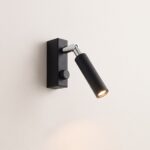
Modern wall light with adjustable head in black or white steel
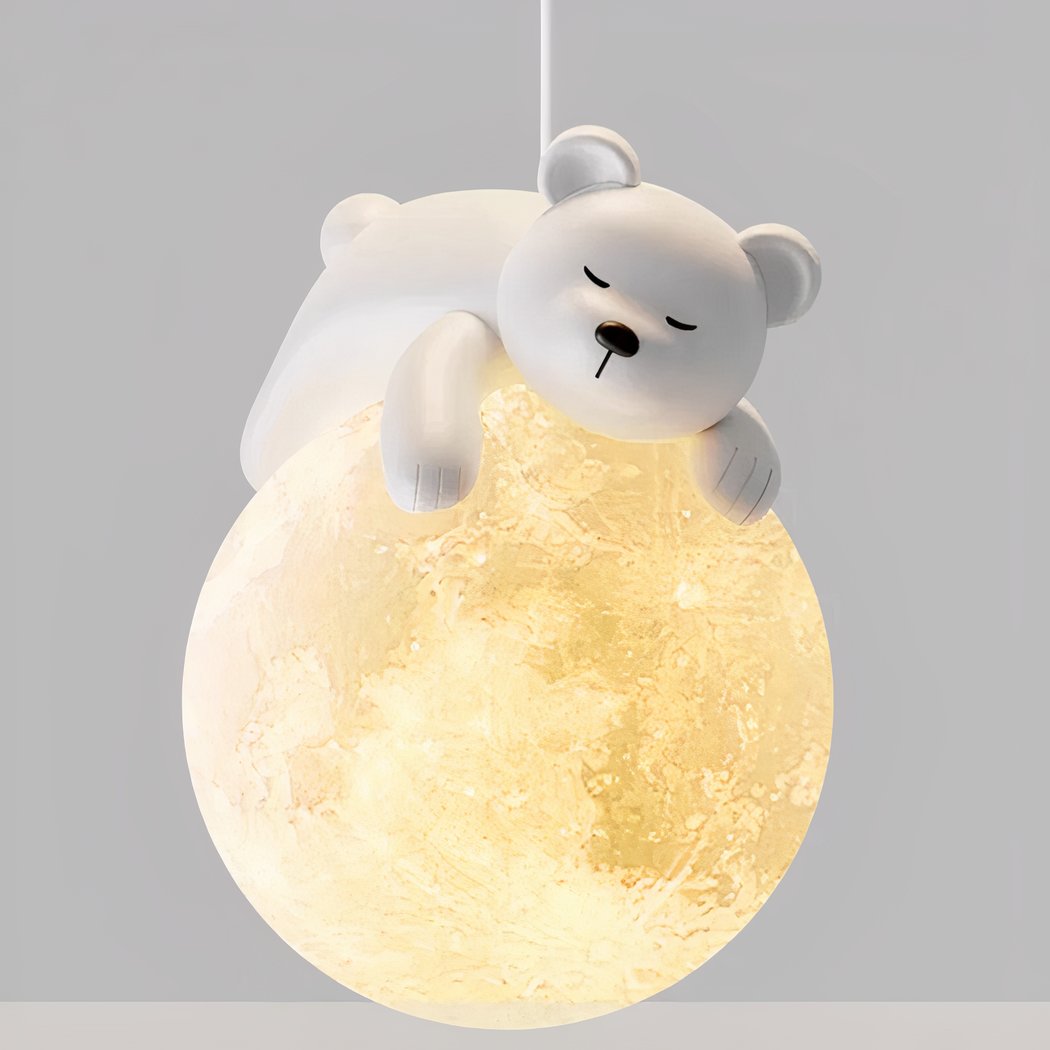
Modern and minimalist LED pendant light in the shape of a bear cub in resin

Round LED wall light in wood
See also

Flickering Lights: Causes, Warning Signs and How to Fix Them

Bookcase Lighting: How to Light Your Books, Shelves and Reading Nook

How Many Lumens Do I Need? Lumens per m² for Every Room
