

Table of Contents
Cosy lighting comes from several low, warm light sources rather than a single ceiling light: bulbs around 2,700 K, shades in fabric, paper, natural fibre or ceramic that filter the light, a dimmer, and a little indirect light on the walls. Together they turn a room into a warm, welcoming space on a dark evening.
Throws, cushions and candles all help, but they cannot do it alone. The same sitting room feels cold under one bright white ceiling light and inviting under three small warm lamps: the light sets the mood before the decor does. That matters all the more in Ireland, where winter evenings start early and the lights are on for most of the time you spend at home. In our own range, the fittings that filter light best are also the ones people choose for this look: 17 fabric pendant lights, 34 natural fibre pendants, 14 Japanese paper pendants and 34 ceramic wall lights. This guide shows you how to combine them, room by room, with simple rules you can check.
What is cosy lighting?
A cosy room makes you want to stay: you feel sheltered, relaxed, a little as if you were wrapped in a blanket. Cosy lighting is the part of that feeling that comes from light, and it rests on the same three ingredients every time.
| Ingredient | What it means | How to get it |
|---|---|---|
| Soft materials | Textures that invite touch | Wool, linen, wood, ceramic, thick fabrics |
| Warm, calm colours | Walls and fabrics that hold the light | Beige, taupe, terracotta, sage green, off-white |
| Warm, low, spread-out light | Pools of light and soft shadow | Several lamps and wall lights, warm bulbs, a dimmer |
The first two come from furniture and decoration. The third is often overlooked, yet it is the one that changes a room fastest, and the cheapest to put right.
Why a single ceiling light kills the cosy feel
Most homes have one light point in the middle of the ceiling. Used on its own, it causes three problems. It lights from above, which hollows out faces and flattens the shape of the room. It lights everything the same way, with no shadow for the eye to rest in. And because it has to light the whole room alone, it gets a powerful bulb, often too white.
Cosy lighting works the other way round: several weaker sources, placed lower and in different parts of the room. The light breaks into small pools, and it is that soft contrast between light and half-light that makes you feel wrapped up.
How to get cosy lighting: the three layers
Lighting designers think in three layers of light. For a cosy room, you combine them and switch them on separately depending on the moment.
1. General light, softened
This is the base light you need to move around and tidy up. Keep it, but filter it. A fabric pendant light or a paper shade spreads a soft light in every direction without glare, where a ceiling light with a plastic diffuser gives a flat light. In the evening, it can stay off or turned right down.
2. Task light
This is the useful light: for reading in an armchair, working at a desk, cooking. It is directed and placed close to the activity. A wall light beside the sofa or a lamp by the bed is enough. The idea is to have enough light where you need it, without switching on the whole room.
3. Accent and mood light
This is the layer that makes a room cosy. Weak, low, often indirect sources: a wall light washing the wall, a small lamp on a shelf, an LED strip behind a unit, a string of lights. They are not there to see by, they are there to draw patches of light around the room.
| Layer | What it does | Suitable fittings | When to use it |
|---|---|---|---|
| General | Moving around, tidying, having people over | Fabric or paper pendant, diffusing ceiling light | Daytime, early evening |
| Task | Reading, working, cooking | Adjustable wall light, reading lamp | During the activity |
| Mood | Creating pools of soft light | Indirect wall light, small lamp, LED strip | In the evening, on its own or nearly |
What colour light is most cosy?
Colour temperature is measured in kelvins (K). The lower the figure, the more yellow the light, close to a flame. The higher it is, the whiter, then bluer, it becomes. Every bulb sold in the EU has to show its colour temperature on the packaging, so it is easy to check before you buy.
- 2,700 K, warm white: the reference for cosy lighting, the tint of the old filament bulbs.
- 3,000 K: still warm, a little more neutral. It suits a kitchen open to the living room, or a desk corner.
- 4,000 K and above: neutral to cool white, fine for a utility room or a garage, not for a sitting room in the evening.
This is not only a matter of taste. In a controlled study published in The Journal of Clinical Endocrinology and Metabolism, ordinary room light of under 200 lux in the hours before bedtime delayed the release of the sleep hormone melatonin in 99 % of participants and shortened it by about 90 minutes, compared with dim light. The HSE’s sleep advice points the same way: keep the bedroom dark at night and avoid bright screens in the hour before bed. A warm, low light in the evening is both cosier and more restful.
Look at the colour rendering index too, shown as CRI or Ra: the higher it is, the more natural your fabrics, your wood and your skin look, so choose the highest one offered for living spaces. And keep one colour temperature per room: two bulbs of different whites in the same room stand out straight away.
Put the light low and on the walls
Cosy light rarely comes from the ceiling. It sits at hand or seated eye level, and it lights the surfaces around you rather than you.
Use several sources at seating height
Spread three or four light points around a living room, at different heights: a wall light, a lamp on a console table, a small light on a shelf. Each one makes its own pool. Avoid lining them up: a triangle of light across the room gives more depth than a row.
Use indirect light
Indirect light sends the light onto a wall or the ceiling, which reflects it back softened into the room. You never see the bulb, only its effect. It is the most comfortable light for the eye, and it makes a room look larger. Wall lights that throw light both up and down draw two beams on the wall, a look that works beautifully behind a sofa or on either side of a bed.

An LED strip hidden behind a TV unit, under a shelf or along the top of a bookcase gives the same effect with no building work. Keep it in warm white, around 2,700 K, so it matches the lamps in the room.
The materials that filter light
The shade is the filter for the light. Its material completely changes what the same bulb looks like.
| Material | How the light looks | Where to use it |
|---|---|---|
| Fabric, linen | Diffuse, soft, slightly golden | Living room, bedroom, above a coffee table |
| Paper | Very diffuse, bright and airy | Hallway, bedroom, rooms in pale tones |
| Natural fibre, rattan | Filtered, with a pattern of light and shadow | Dining room, conservatory, boho living room |
| Ceramic | Opaque, light thrown onto the wall | Mood wall lights, hallway, bedroom |
| Opal glass | Even, with no visible hot spot | Living room pendant, reading wall light |
| Opaque metal | Directed, a sharp beam downwards | Reading, kitchen island, not for mood on its own |
For a cosy room, favour materials that diffuse. A natural fibre pendant light throws a lacy pattern of shadow across the ceiling and walls in the evening. A Japanese paper pendant light gives a light, even glow. Ceramic wall lights, which are opaque, send the light onto the wall and never show the bulb. This low, filtered light is also the heart of wabi-sabi interior design.
Always check the result with the lamp switched on: a fabric that is too thin shows the bulb and becomes dazzling, a shade that is too thick lets only a faint glow through.
Cosy lighting room by room
The living room
This is the room that benefits most. Keep a soft general light, a fabric pendant for example, add a wall light or a reading lamp by the sofa, then one or two mood sources: an indirect wall light on one wall, a small lamp on a shelf. In the evening, switch the pendant off and keep the low sources on.
The bedroom
Remove anything that lights hard at bedtime. Two wall lights on either side of the bed, with a shade that hides the bulb, can replace bedside lamps and free up the bedside tables. Choose them with a switch within reach, like our reading wall lights, and stay with warm white.
The dining room
A pendant above the table creates an island of light that draws people together. Natural fibre or fabric gives a warm light that flatters faces. Leave the rest of the room in a soft half-light, with a wall light or a lamp on the sideboard.
The hallway
It is the first impression when you come home on a winter evening. An indirect wall light or a small lamp on the hall table is enough to make arriving feel welcoming, rather than a ceiling light at full power.
The reading corner
An armchair, a throw and a light of its own: it is the cosiest corner of the house, as long as the light is well placed. It should come from the side or slightly behind, over the shoulder, so it lights the page without casting the shadow of your head on it. Keep a second, weaker source elsewhere in the room, so your eyes do not jump from a bright page to a black background.
Small spaces
In a small room or an apartment, the temptation is to light it brightly to make it feel bigger. The opposite works: several small sources, at least one of them on the walls, create separate zones for sleeping, eating and sitting, and give the impression of several rooms. Wall lights and pendants also free up surfaces that table lamps would take.
Walls and colours change the light
The same bulb does not give the same mood from one room to another. Pale walls reflect a large part of the light and spread it around; dark walls absorb it and leave deeper shadows. Both can be cosy, in different ways. With pale walls in off-white, linen or beige, light spreads easily and a few sources are enough, so make the most of indirect light. If your walls are a warm greige colour, you get the same effect, as long as the bulbs stay warm. With darker or coloured walls, such as terracotta, sage green or deep blue, the room feels more enveloping but needs more light points, and the pools of light stand out more, which strengthens the cocoon effect. Burgundy walls work the same way, and our guide to what colour goes with burgundy suggests the shades and the light to pair with them. Warm neutrals like taupe colour sit in between and take warm light particularly well. Matt textures, such as a limewash or a textured paint, catch the grazing light of a wall light and reveal their relief in the evening.
Candles and fairy lights: the finishing touch
Candles bring a living, very warm light that few fittings can imitate. They complete the lighting, they do not replace it: never leave them unattended, keep them away from curtains and fabrics, and out of reach of children and pets. LED candles give a similar effect with no flame. Fairy lights on a shelf or around a mirror add small points of weak light, to switch on alone in the evening.
Dimmers and scenes: set the level
A cosy room is not a dark room. It is a room where you choose how much light you want at each moment. A dimmer is the most effective tool for that: full light for tidying, lower for dinner, the minimum for a film. The bulb must be marked “dimmable”, or it will flicker or buzz, and the wall dimmer must be rated for LEDs. Our guide to the dimmer switch explains how to choose one, and in Ireland fitting it is a job for a Registered Electrical Contractor if you have any doubt about the wiring.
Without any building work, smart bulbs also let you lower the light and set scenes, for example a light that fades gradually at the end of the evening.
Mistakes that break a cosy feel
A few habits undo everything else. Light that is too white is the first: above 3,000 K a room loses its warmth, especially in the evening. A bare bulb at eye level dazzles, so keep exposed bulbs for pendants hung high. Switching everything on at once defeats the point of layers, which is to be able to switch some off. Mixed colour temperatures jar: one cool bulb among warm ones stands out immediately. And forgetting the corners shrinks a room, when one small light in a dark corner is enough to open it up.
Cosy lighting: frequently asked questions
What is cosy lighting?
Cosy lighting is warm, low and spread-out light that makes a room feel sheltered and relaxing. Instead of one bright ceiling light, it uses several softer sources, such as wall lights, table lamps and a shaded pendant, with warm white bulbs around 2,700 K and shades that filter the light. It creates pools of light and soft shadow rather than an even glare.
How do you get cosy lighting?
Switch off the single bright ceiling light in the evening and use three or four lower sources at different heights: a wall light, a lamp, a small light on a shelf. Fit warm white bulbs of 2,700 K, choose fabric, paper, natural fibre or ceramic shades, add some indirect light on the walls and put the main light on a dimmer.
What colour light is most cosy?
Warm white, around 2,700 K, the tint of the old filament bulbs. 3,000 K is still warm and suits a kitchen or a desk corner. Cooler whites of 4,000 K and above feel harsh in a living room or bedroom in the evening. The colour temperature is printed in kelvins on the packaging of every bulb sold in the EU.
How do you create cosy lighting in a bedroom?
Keep the ceiling light for tidying and rely on low light in the evening: two wall lights or bedside lamps with shades that hide the bulb, a switch within reach of the bed, and warm white bulbs. Research shows ordinary room light before bedtime delays the sleep hormone melatonin, so a dim, warm light suits the hour before sleep.
What is the three layer lighting rule?
It is the idea of combining three layers of light in a room: general light to move around, task light for reading or cooking, and accent or mood light to create atmosphere. For a cosy room, you switch them on separately, and in the evening you keep mostly the mood layer, with the general light off or dimmed.
Are warm or cool lights better for a living room?
Warm lights. A warm white around 2,700 K to 3,000 K makes a living room feel inviting and flatters wood, fabrics and skin, while cool white above 4,000 K feels clinical in the evening. Keep one colour temperature throughout the room, and add a dimmer so the same lights work for tidying and for relaxing.
Sources
- Gooley JJ et al., Exposure to room light before bedtime suppresses melatonin onset and shortens melatonin duration in humans, The Journal of Clinical Endocrinology and Metabolism, 2011. doi.org
- Sleep problems: tips and self-help, keeping the bedroom dark and avoiding screens before bed. HSE
- Commission Regulation (EU) 2019/2020, ecodesign requirements for light sources: colour temperature on the packaging and the warning for light sources that cannot be dimmed. EUR-Lex
Related products
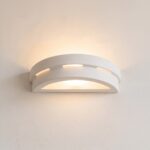
White half-moon ceramic wall light, indirect lighting
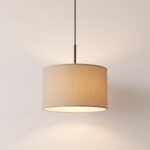
Beige fabric drum pendant light, timeless design

Handcrafted Japandi Natural Fibre Pendant Light
See also

Flickering Lights: Causes, Warning Signs and How to Fix Them

Bookcase Lighting: How to Light Your Books, Shelves and Reading Nook

How Many Lumens Do I Need? Lumens per m² for Every Room
