

Table of Contents
Japandi style is an interior design style that blends Japanese minimalism with Scandinavian comfort. It rests on four things: low, clean lines, a palette of warm neutrals, natural materials left on show (pale wood, paper, linen, ceramic) and a warm, diffused light that gives a Japandi interior its calm.
The word Japandi joins “Japan” and “Scandi”. Light matters as much as furniture: the same beige and oak living room looks cold under one bright ceiling light, and restful under two or three warm sources filtered through paper or fibre. This guide covers the principles, the colour palette with its codes, the materials, then the right light and Japandi lights room by room.
What is Japandi style? Where Japan meets Scandinavia
It is a way of furnishing and decorating that brings together two traditions far apart on the map but close in spirit. The term emerged around 2016, yet the dialogue between Japanese and Scandinavian design is much older: you can see it in ceramics, in architecture and in Danish furniture long before the name existed. That Danish furniture is also the backbone of the mid century modern style.
Each culture lends the style one strong idea. From Japan comes wabi-sabi, an aesthetic that accepts imperfection and the passing of time: hence the place given to craft and to materials that age well. From Denmark and Norway comes hygge, a word for a cosy, contented mood: hence soft textiles, pale wood and warm lights on long winter evenings.
Both traditions respect natural materials and reject the superfluous. The result is warmer than a strict Japanese interior, and more restrained, with darker touches, than a Scandinavian one.
Japandi, Scandinavian or Japanese: what sets them apart
| Scandinavian | Traditional Japanese | Japandi | |
|---|---|---|---|
| Colours | White, pale grey, pastels | Natural wood, beige, black | Warm neutrals, taupe, touches of black and green |
| Wood | Very pale: pine, birch | Natural, sometimes dark or blackened | Light oak, paired with a deeper tone |
| Furniture | Functional, slim legs, comfortable | Low, close to the floor, very few pieces | Low, straight lines with softened corners, few pieces |
| Textiles | Wool, throws, plenty of cushions | Sparse, tatami | Linen, raw cotton, a little wool |
| Light | Warm, candles, many lamps | Subdued, filtered through paper | Warm, diffused, low, from several points |
| Spirit | Cosiness, conviviality | Simplicity, contemplation | Calm, warmth and function |
How to create a Japandi home: the key principles
Five principles come up in every room:
- Few pieces, each with a purpose. Empty space is part of the decor: it lets materials and light breathe. Closed storage hides everyday clutter.
- Low lines. A low sofa, a platform bed, a wide coffee table, a long sideboard: your eye stays close to the floor, which makes the room feel bigger.
- Straight lines, softened. Furniture is clean-lined, but corners are rounded and objects take organic shapes: bowl, pebble, globe.
- Natural materials on show. Solid wood, paper, linen, matt ceramic, stone, woven fibres. The grain of the wood and the texture of the clay count as much as the colour.
- Craft over mass production. A thrown pot, a woven basket or a paper lantern brings the imperfection that keeps the style alive.
Plants finish the look, sparingly: a dry branch in a vase or a single olive tree rather than a jungle of greenery.
The Japandi colour palette: warm neutrals, pale wood and dark accents
The colours are warm neutrals: off-white, linen, beige, sand and taupe, lifted by pale wood, a few charcoal touches and a natural green. Avoid brilliant white and bluish grey, which cool the room.
To balance your colours, our recommendation is a 60/30/10 split: around 60% light base on the walls, ceiling and large textiles, 30% deeper materials on the furniture and floor, and 10% dark or green accents in the details. Here is the palette we use as a reference:
- Off-white, #F2EEE7: walls and ceiling. It reflects light without the clinical look of brilliant white.
- Linen, #E6DDD0: curtains, bedding, rugs.
- Light oak, #C9A97E: furniture and floor, the material that warms everything else.
- Taupe, #A2907B: sofa, ceramics or a feature wall. To pick the right shade, see our guide to the taupe colour.
- Moss green, #7D8266: plants, cushions, a vase.
- Charcoal black, #2E2C2A: frames, furniture legs, handles, a piece of ceramic.

One last colour is often forgotten: the colour of the light. A warm white bulb around 2,700 K keeps these neutrals beige and golden in the evening; a cool white bulb turns them grey and flat.
Japandi materials: wood, paper, linen, ceramic and natural fibres
Materials come first in this style, and several of them act directly on the light.
Wood
Oak, ash, beech or bamboo: paler on the Scandinavian side, darker or even blackened on the Japanese side. Over a pale floor, a deeper-toned table adds depth. Choose an oiled or matt finish, as gloss varnish throws back reflections.
Paper
Paper is the most Japanese material in the style. Washi is made by hand from the inner bark fibres of shrubs such as the paper mulberry; paper reached Japan by the seventh century, and the Japanese craft of washi is now listed by UNESCO as intangible cultural heritage. Paper also covers the sliding shoji screens, whose translucent panels on a timber lattice carry daylight deep into a room. Stretched in front of a bulb, it turns a point of light into a softly glowing volume: that is the whole idea behind a Japanese paper pendant light.
Linen, wool and woven fibres
Crumpled linen, raw cotton, a little wool for winter: textiles bring the hygge side, as long as they stay plain and few. Rattan, wicker and natural fibre add relief and, at night, a textured halo on the walls.
Ceramic and stone
Matt stoneware, terracotta, stone or polished concrete add weight and the darker notes. A matt ceramic absorbs light instead of reflecting it, which softens contrasts. On a whole wall, terracotta becomes the main colour of a terracotta bedroom.
Japandi lighting: soft, warm, diffused and low
The light comes down to three words, warm, diffused and low, and draws on both traditions. From Scandinavia comes a warm light spread across many sources, made for long winter evenings. From Japan comes light filtered through paper, which the writer Jun’ichirō Tanizaki praised in 1933 in his essay In Praise of Shadows, where he sets the Western search for brightness against the Japanese taste for shadow and for materials that glow softly.
Warm light, around 2,700 K
Choose warm white bulbs around 2,700 K, the shade of the old incandescent bulbs. Colour temperatures from 2,700 to 3,000 K count as warm; above that, wood starts to lose its glow. Keep one colour temperature throughout the room: two different whites show up at once on a pale wall. To match the brightness of the old bulbs too, our lumens to watts chart gives the lumens to look for.
Diffused light, never a bare bulb
In a Japandi room you never see the bulb. Each diffuser gives a different light:
| Diffuser | The light it gives | Where it works best |
|---|---|---|
| Paper | A soft, even glow with a slight texture | Living room, bedroom, over a coffee table |
| Natural fibre or rattan | A warm glow and a patterned halo on walls and ceiling | Living room, dining room |
| Opal glass | A smooth, luminous globe with no visible bulb | Dining table, kitchen island, hall |
| Ceramic | Indirect light washing up or down the wall | Either side of the bed, hallway, beside a mirror |
| Linen or fabric shade | A pool of light below and a gentle glow through the shade | Table lamps, floor lamps, a reading corner |
Low light from several points
Rather than one powerful central ceiling light, add several sources at eye level or lower: a pendant hung low over the table, a wall light by the sofa or the bed, a lantern on the floor. The room keeps pools of shadow, and that is intentional. A dimmer then lets you move from a working light to an evening light. The layering principle is explained in our guide to cosy lighting, of which Japandi is a more pared-back version.

Japandi lights: which fittings to choose
A fitting that suits the style has three traits: a simple, often organic shape (globe, lantern, oval, cylinder), a natural or filtering material (wood, paper, fibre, opal glass, ceramic) and a hidden bulb.
The Japandi pendant light
This is the key fitting of the style. Two families share the role: paper or fibre lanterns, wide and light, which spread an enveloping glow, and opal glass globes paired with pale wood, which look more graphic. Our Japandi pendant light collection covers both, from a small 11 cm opal globe topped with a wooden ball to a natural fibre lantern 60 cm across.
The Japandi chandelier
A Japandi chandelier stays simple: no crystal drops, but opal globes on a wooden frame, or a compact ceiling fitting in pale wood and glass for the low ceilings of bedrooms and halls. See our Japandi chandelier range.
The Japandi wall light
The wall light is the ally of low light: in white ceramic it washes the wall with a halo, in wood and fabric it acts as a bedside lamp fixed to the wall. Our Japandi wall light selection includes compact models for either side of a bed or a mirror. If you need a new light point on the wall or over the table, that is a job for a Registered Electrical Contractor.
The Japandi lamp
A ceramic table lamp with a linen shade, or a paper lantern on the floor, is the easiest Japandi touch to add to the room you already have.
Japandi style room by room
Japandi living room
A low linen sofa, a solid wood coffee table, a jute rug and few objects. If there is a single ceiling point, start there: a large paper or fibre pendant, then a wall light or low lantern by the sofa. For height and diameter, see our guide to choosing a living room pendant light.
Japandi bedroom
A low platform bed, linen bedding, bedside tables reduced to a simple shelf. The bedroom is where low light matters most: two wall lights either side of the bed replace bedside lamps and free up space. Keep a ceiling light or a small chandelier for tidying, and switch it off in the evening.

Japandi dining room and kitchen
A solid wood table, wooden chairs with woven cord seats, and a pendant hung low enough to create an island of light above the diners. Over a small round table, a single opal globe is enough; over a long table, line up two or three globes or choose one wide lantern. Our guide to dining room lights gives the practical checks. In a Japandi kitchen, add hidden strip lights under the wall units and an opal or paper pendant over the island.
Japandi bathroom and hallway
In the bathroom, oiled wood, stone and matt ceramic work too, with fittings rated for their place near water, as explained in our guide to IP ratings. In a hallway, a row of ceramic wall lights or a compact wood and opal glass ceiling light gives a soft welcome without glare.
Japandi style: frequently asked questions
What does Japandi mean?
The word is a blend of the words “Japan” and “Scandi”. It names an interior style that took that name around 2016 and brings together Japanese minimalism and Scandinavian simplicity and comfort: low furniture, natural materials, warm neutral colours and a soft, warm light.
What are the 7 rules of Japandi style?
There is no official list, but seven principles sum it up: keep few pieces, each with a purpose; favour low furniture; use clean lines with softened corners; leave natural materials on show; choose craft over mass production; stick to warm neutrals with dark and green accents; and light the room with warm, diffused, low light from several sources.
Is Japandi still in style in 2026?
Yes. The name dates from the mid-2010s, but the style rests on principles that do not date: fewer, better pieces, natural materials and calm colours. That is also why a room can move towards it gradually, starting with the light.
Are wabi-sabi and Japandi the same?
No. Wabi-sabi is a Japanese aesthetic of imperfection and the passing of time: uneven plaster, earth, weathered wood, old objects, an earthy palette. Japandi borrows its love of materials and craft but adds the Scandinavian comfort of hygge. It is tidier, smoother and lighter.
What are common Japandi decor mistakes?
Brilliant white and cold grey; too many “zen” objects, when Japandi shows a few pieces chosen one by one; more than two or three wood species in one room; a single powerful ceiling light that flattens the materials; and cool white bulbs, under which, in our experience, linen and oak turn greyish from around 4,000 K.
What bulb should you use in a Japandi light?
A warm white LED bulb around 2,700 K, frosted if it shows through paper or glass. Check the cap on the product page before you buy: many Irish homes use the B22 bayonet, while our Japandi fittings mostly take E27 or G9 bulbs. Under a paper or fibre shade, LED has another advantage: it runs much cooler than an old incandescent bulb.
Sources
- Japandi, Wabi-sabi and Hygge, encyclopaedia articles: origin of the term around 2016, the two influences, materials, colours and warm indirect lighting. Wikipedia
- Washi and Shoji, encyclopaedia articles: bark fibres of Japanese paper, UNESCO intangible cultural heritage listing, translucent paper screens that diffuse daylight. Wikipedia
- In Praise of Shadows, encyclopaedia article on the 1933 essay by Jun’ichirō Tanizaki. Wikipedia
- Color temperature, encyclopaedia article: 2,700 to 3,000 K described as warm, above 5,000 K as cool. Wikipedia
- Home Safety: always use a Registered Electrical Contractor for electrical works. Safe Electric
Related products

Japandi-style wood and opal glass globe pendant light
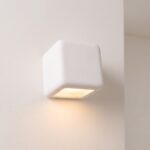
White ceramic and glass rounded cube wall light

Handcrafted Japandi Natural Fibre Pendant Light
See also

Flickering Lights: Causes, Warning Signs and How to Fix Them

Bookcase Lighting: How to Light Your Books, Shelves and Reading Nook

How Many Lumens Do I Need? Lumens per m² for Every Room
