

Table of Contents
Scandinavian style is a way of decorating that comes from the Nordic countries. It brings together light interiors (white, pale grey, blond wood and a few pastel touches), simple and practical furniture, natural and soft materials, and warm light spread across several points. That layered light, designed to make up for short winter days, is the thread that runs through it.
A white and wood living room can feel as cold as a waiting room, or as snug as a cabin in winter: the difference almost always comes down to the light. Nordic homes worked this out long ago, in countries where the sun shines for barely six hours in the depths of winter. Ireland is not so far behind, which is one reason the style travels so well here. This guide gives you the rules of Scandinavian interior design, its colour palette with hex codes, the lights that define it, and how to light a Scandi living room and bedroom.
What is Scandinavian style, and what are its rules?
Scandinavian style is a way of furnishing and decorating the home that comes from Denmark, Sweden and Norway, the three countries of Scandinavia in the strict sense, and from their Nordic neighbours, Finland and Iceland. It rests on one simple idea: a bright, practical and welcoming home, where every object is useful and made of a good material.
Where Scandinavian style comes from
Its roots go back to the late nineteenth century. In 1888, the Swedish painter Carl Larsson and his wife Karin settled in a small house at Sundborn, near Falun, which they decorated and furnished to their own taste; Karin designed much of the interior and its textiles. The watercolours he painted there, published in 1899 in the album Ett hem (“A Home”), made the house one of the most famous artists’ homes in the world and a reference for Swedish interior design.
Scandinavian design then had its golden age in the 1950s, across the five Nordic countries. The Design in Scandinavia exhibition, which toured the United States and Canada from 1954 to 1957, made “Scandinavian Modern” fashionable in North America. Pale wood furniture, glass, ceramics, textiles and lights all defended the same values: simple, functional forms, natural materials and objects that most people could afford.
Ireland has its own link with this story. In the early 1960s, a group of Scandinavian designers invited by the Irish Export Board reviewed the state of Irish design; their findings, known as the Scandinavian Report, led to the founding of the Kilkenny Design Workshops in 1963. Today’s Scandinavian decor keeps the spirit of that period far more than its furniture.
The six rules of Scandinavian interior design
- Light comes first. White or very pale walls, blond wooden floors, light curtains: everything is there to catch the smallest amount of daylight and bounce it around the room.
- Pale wood everywhere. Pine, birch, beech, ash or light oak, often oiled or soaped, on the floor as well as on furniture and light fittings.
- Few, useful pieces of furniture. Every piece earns its place, and slim legs lighten the room by keeping the floor visible. Closed storage stops clutter from building up.
- Soft shapes. Rounded corners, round tables, globes and domes: the geometry stays simple and never harsh.
- Plenty of natural textiles. Wool, linen, cotton, a sheepskin over a chair, throws and cushions: they are what warm up a very pale palette.
- Several small lights rather than one big one. A pendant over the table, wall lights, table lamps, candles: light comes from everywhere, at eye level or lower.
Plants complete the look: a green plant, a few branches in a vase, a seasonal bunch of flowers. A few touches of black, a frame, a chair or a lamp base, give structure to a very light interior. On the other hand, three mistakes tip a Scandinavian scheme into coldness: brilliant white on every wall of a north-facing room, cool white bulbs, and a single powerful ceiling light that flattens every texture.
Scandinavian, Japandi or mid century modern?
Three neighbouring styles often overlap. Japandi style brings Scandinavian design closer to Japan, with more beige and fewer objects. Mid century modern prefers teak, brass and stronger colours. Scandinavian style is the lightest and softest of the three:
| Scandinavian | Japandi | Mid century modern | |
|---|---|---|---|
| Background | Off-white, pale grey | Linen, beige, taupe | Cream, off-white |
| Wood | Blond: birch, pine, light oak | Light oak with dark wood | Teak, walnut |
| Accents | Pastels, a little black | Charcoal, moss green | Mustard, olive, orange |
| Light | Warm, from many low points | Warm, filtered by paper | Opal globes, brass |
Hygge and light: why Scandinavian style starts with lighting
On 21 December, the day lasts 7 hours 30 minutes in Dublin, from sunrise to sunset. It falls to 7 hours 1 minute in Copenhagen, 6 hours 5 minutes in Stockholm, 5 hours 54 minutes in Oslo and 5 hours 49 minutes in Helsinki. For months, people in the Nordic countries spend a large part of their day under artificial light. Their homes were built around that constraint: pale walls to lose none of the daylight, and in the evening, a warm, soft light spread right across the room. Dublin is only half an hour better off than Copenhagen at midwinter, so the Nordic answer suits an Irish home just as well.

In Denmark and Norway, this way of living has a name: hygge. The word describes a feeling of comfort, closeness and conviviality, the feeling of an evening with friends around a table, under a throw, by the light of a few candles. It spread around the world in the mid 2010s, and in 2016 Collins English Dictionary shortlisted it for its word of the year. Light is its central ingredient: candles on the table, low lamps, the glow of a lit window.
Layered lighting, the thread of the style
A Scandinavian home almost never relies on one strong ceiling light in the middle of the room. Its light is organised in three layers:
- Softened general light, from a pendant or a ceiling light that hides the bulb, to move around and tidy up.
- Task lights, placed where you do things: over the table, by the reading chair, beside the bed.
- Low ambient lights: wall lights, table lamps, candles or a small lamp on the windowsill, which create warm pools of light and leave areas of soft shade.
In the evening, switch off the general light and keep the other two: the room feels more intimate and warmer. The full recipe for a warm atmosphere, with heights and diffusing materials, is in our guide to cosy lighting. Here, remember the rule of the style: more sources, placed lower.
Warm light and a hidden bulb
Choose warm white bulbs around 2,700 K: the shade of the old incandescent bulb, which keeps blond wood the colour of honey and white soft. Above 4,000 K, a white and grey interior starts to look like an office. Hide the source, too: a fabric shade, a dome open at the bottom or an opal globe stops you seeing the bulb from the sofa. Where it stays visible, on a wall light with an exposed bulb for example, choose an amber or opal filament LED, which is gentler on the eye.
Check the cap before you buy. Many table lamps and ceiling pendants in Irish homes take a B22 bayonet bulb, while our Scandinavian pendants and wall lights take an E27 screw bulb, so buy your bulbs for the fitting rather than for the old lamp. Fitting a new pendant or a new wall light point is a job for a Registered Electrical Contractor, working to I.S. 10101.
The Scandinavian colour palette: white, pale grey, blond wood and pastels
The typical colours of Scandinavian decor are light neutrals, off-white and pale grey, combined with blond wood, a few pastel touches and a little black to draw the lines. The light background covers most of the room; pastels stay as accents, on a cushion, a throw, a vase or a single wall.
Here is the palette we use as a reference. Four bases cover most of your room: off-white, #F4F1EA, on walls and ceiling, which reflects light without the clinical look of brilliant white; pearl grey, #D6D5D0, for the sofa, curtains and rug; birch, #E6D3B3, the palest wood of the style, for the floor and furniture; and light oak, #C9A97E, one shade deeper, for the table, shelves and wooden lights. Then come the accents: dusty pink, #E4C6BD, on cushions, throws and bed linen; mist blue, #AFC0CB, on a bedroom feature wall or a piece of ceramic; sage green, #A9B39A, on a vase, plants or an armchair; and black, #2E2E2E, for frames, slim furniture legs or a metal pendant.

Two tips to stop the palette turning cold. Choose an off-white rather than brilliant white, especially in a north-facing room: under a grey Irish sky, it keeps a little warmth. And choose a slightly warm grey that sits well with wood; for more pairings, our guide answers the question what colour goes with grey. A grey-beige, the greige colour, also makes a very good background, warmer than a pale grey. Finally, light is part of the palette: under a 2,700 K bulb, off-white takes on a creamy glow and wood turns golden, while cool white makes them both look flat.
Scandinavian lighting: wood, fabric, globe pendants and shades
You can recognise a Scandinavian light by three things: a simple shape (dome, globe, cylinder, cone), a natural or soft material (pale wood, fabric, opal glass, white or black lacquered metal) and a light that is directed or filtered, so that it never dazzles.
The wooden dome pendant
This is the signature piece of the style. A lacquered metal dome, white or black, topped with a wooden collar, sends the light down and hides the bulb: the ideal light over a table. Our round Scandinavian pendant light in natural wood follows this design with a shade 38 cm across, in white or black, for an E27 LED bulb of up to 15 W, not supplied. Our whole Scandinavian pendant light range works these shapes in natural wood, ceramic or metal.
The globe pendant and opal glass
An opal glass globe spreads a soft light in every direction: it is the brightest shape of the style, perfect in a hall, a landing or a bedroom. Set on a pale wooden base, it becomes a small, very Scandinavian ceiling light that suits low ceilings. Over a table, choose several small globes rather than one large one: their light spreads more evenly over the top.
The fabric shade
Fabric is the softest material for filtering light. A linen or cotton shade, in beige, white or pale grey, turns the bulb into a warm glow that also lights the walls a little. It is the natural choice over a coffee table, in a bedroom or on a table lamp.
Scandinavian ceiling lights and wall lights
A Scandinavian ceiling light stays sober: no crystal drops, but spots or globes on a pale wooden frame, or a compact fitting in wood and white. You will find these designs in our Scandinavian chandelier collection. The wall light is the tool of low light: in wood and metal, it works like a small lamp fixed to the wall, without taking up space on a piece of furniture. Our Scandinavian wall light range includes designs with an exposed bulb, in wooden tubes, in ceramic or in glass.
| Light | Typical material | Light it gives | Where to fit it |
|---|---|---|---|
| Dome pendant | Lacquered metal and wood | Directed down, without glare | Dining table, kitchen island |
| Opal globe | Opal glass, wooden base | Diffused, in every direction | Hall, landing, bedroom |
| Fabric shade | Linen, cotton | Filtered, warm, partly onto the walls | Coffee table, bedroom |
| Wall light | Wood, metal, glass | Local, low, at eye level | By the sofa, either side of the bed |
| Table lamp | Ceramic, wood, fabric | A low pool of light | Sideboard, console, windowsill |
Scandi living room: plenty of low points of light
The typical Scandinavian living room brings together a pale grey or ecru sofa, a blond wood coffee table, a wool rug, an armchair dressed with a throw or a sheepskin, open shelves and a few plants. Furniture stays sparse and stands on slim legs, to keep the floor visible and the room bright.
For the lighting, think in points rather than in power. In your living room, we recommend three or four sources at different heights: a pendant with a shade hung low over the coffee table, a wall light or a lamp by the sofa for reading, a low lamp on a sideboard and a small light on the windowsill. Keep the same colour temperature everywhere, 2,700 K, and spread the sources around the room: your eye should move from one pool of light to the next. A dimmer on the pendant then takes you from a clear light for dinner to a soft glow for the evening. For the size and hanging height of the pendant, see our guide to the living room pendant light.

Scandinavian bedroom: softness and restraint
The Scandinavian bedroom takes softness further than the living room: washed linen or cotton bedding in white, pale grey or dusty pink, a pale wood headboard or simply a painted wall, a wool blanket at the foot of the bed, a wooden stool as a bedside table, and very little else.
In your bedroom, low light matters more than anywhere else. Two wall lights either side of the bed replace bedside lamps, free up space and light your book without dazzling the person next to you, as long as their source faces the wall or is filtered. Keep a soft pendant or ceiling light for tidying up, and switch it off in the evening.

Scandinavian style: frequently asked questions
What defines Scandinavian style?
Light above all: white or pale walls, blond wood, natural materials, a few simple and practical pieces of furniture, soft shapes and plenty of wool and linen. Its signature is a warm light spread across several low points, designed for long winter evenings in the Nordic countries.
What colours are used in Scandinavian style?
Off-white and pale grey for the background, blond wood such as birch, pine or light oak for the floor and furniture, one or two pastel accents such as dusty pink, mist blue or sage green, and a little black to draw the lines. Avoid brilliant white on every wall of a north-facing room, where it quickly looks flat under a grey sky.
What are some good Scandinavian decorating ideas?
A wool rug, linen throws and cushions, a sheepskin on a chair, open shelves in pale wood, a few plants, black and white prints, candles and several small lamps. To change the feel of a room without repainting, start with the light: a wooden or fabric pendant and two low lamps are often enough.
What is the difference between Scandinavian and Nordic design?
Scandinavia, in the strict sense, covers Denmark, Sweden and Norway. The Nordic countries also include Finland and Iceland. In interior design the two words are used almost interchangeably, since the five countries share the same pale, practical and warm style.
How do you make a Scandinavian room feel cosy?
Warm up the white with wool and linen, blond wood on the floor or furniture, and above all with light: bulbs at 2,700 K, three or four low sources instead of a single ceiling light, and a dimmer for the evening. An off-white rather than brilliant white and a slightly warm grey do the rest.
Which bulb should I choose for a Scandinavian light?
A warm white LED bulb around 2,700 K, frosted under a shade or globe. For a wall light or pendant with an exposed bulb, choose a filament LED in clear or amber glass, gentler to look at. Check the cap on the product page: our Scandinavian lights take an E27 screw bulb, while many Irish lamps take a B22 bayonet.
Sources
- Scandinavian design, encyclopaedia article (rise in the 1950s, the Design in Scandinavia exhibition in North America from 1954 to 1957, principles of the style). Wikipedia
- Carl Larsson, encyclopaedia article (the house at Sundborn in 1888, the album Ett hem of 1899, Karin Larsson’s role, influence on Swedish interior design). Wikipedia
- Kilkenny Design Workshops, encyclopaedia article (the Scandinavian Report, founding in 1963). Wikipedia
- Hygge, encyclopaedia article (meaning, Collins English Dictionary shortlist for 2016). Wikipedia
- Daytime and Colour temperature, encyclopaedia articles (day length by latitude and season, basis of the chart calculation; shades of white light). Wikipedia
- Home Safety: always use a Registered Electrical Contractor for electrical works. Safe Electric
Related products

Natural wood and metal wall light, vintage Scandinavian design
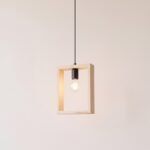
Scandinavian natural wood and metal frame pendant light
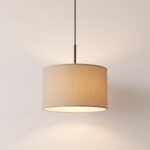
Beige fabric drum pendant light, timeless design
See also

Flickering Lights: Causes, Warning Signs and How to Fix Them

Bookcase Lighting: How to Light Your Books, Shelves and Reading Nook

How Many Lumens Do I Need? Lumens per m² for Every Room
