

Table of Contents
For good hallway lighting, aim for about 100 lux, or roughly 200 lumens installed per square metre of floor, in warm white between 2,700 and 3,000 K. Wall lights are the most versatile choice, a pendant suits a tall hall or a stairwell, spotlights or a flat ceiling light suit a low ceiling, and a switch at each end saves you crossing it in the dark.
The hall is often the darkest part of an Irish house: little or no window, walls close together, and a single light in the middle of the ceiling. Yet it is the space you pass through most, and the first thing you see when you open the front door. In a typical semi-detached or terraced house it is also one continuous space with the stairs and the landing, so the lighting has to work on two floors at once. This guide helps you choose the right type of light for the shape of your hall, work out how much light you need and place each fitting where it does the most good. Our hallway pendant lights and LED wall lights cover every one of these situations.
What type of lighting is best for a hallway?
A hall has three needs: to see where you are putting your feet, to feel welcomed, and not to be dazzled as you walk through. Three families of light fittings meet them, alone or combined.
Wall lights: the most versatile option
A wall light takes neither height nor floor space. Placed at regular intervals, it creates a rhythm of light that leads the eye to the end of the hall. Models that throw light both up and down wash the wall and make the space look wider, a real advantage in a narrow hall. Choose a slim wall light if the passage is tight, so you do not catch it with your shoulder or a shopping bag.

Pendant lights: for tall halls and stairwells
A pendant dresses a hall with a high ceiling, a generous entrance or the tall space above a staircase. It brings a decorative presence that wall lights cannot. In a long hall, several identical pendants in a row create a lovely sense of perspective, and over a stairwell, a staircase pendant light on a long cable lights the stairs and the landing in one go. Just check the headroom: with a 2.4 m ceiling, a pendant 40 cm tall leaves 2 m underneath it, which is tight for a tall visitor. Our modern drop-shaped pendant light keeps a slim profile that suits a hall.
Spotlights and flat ceiling lights: for low ceilings
Under a low ceiling, nothing should hang down. Recessed spotlights or a flat ceiling light spread the light without reducing the height. A ceiling light with adjustable spots also lets you aim the light at a picture, a door or the coat hooks. For a compact option, our modern round LED spotlight ceiling light in aluminium is only 12 cm across and 11 cm deep, takes a GU10 bulb, and a few of them spaced along the ceiling light a low hall evenly.
How much light does a hallway need?
The amount of light that lands on a surface is measured in lux, and one lux is one lumen spread over one square metre. For reference, the illuminance examples usually quoted for lighting put an office building hallway at around 80 lux and a family living room at around 50 lux. In a home hall, where you also look for keys, check your reflection and read the post, a round figure of about 100 lux gives comfortable light without glare. As part of the light is lost on the walls and ceiling, that means about 200 lumens installed per square metre of floor.
The calculation is simple: multiply the floor area of the hall by 200 to get the total light output to share between your fittings.
| Hall | Floor area | Suggested total output | Example |
|---|---|---|---|
| Small hall, 1 m x 3 m | 3 m² | about 600 lumens | 2 wall lights of 300 lumens |
| Medium hall, 1.2 m x 5 m | 6 m² | about 1,200 lumens | 3 wall lights of 400 lumens |
| Long hall, 1.2 m x 8 m | 9.6 m² | about 2,000 lumens | 4 wall lights of 500 lumens, or 2 pendants of 1,000 lumens |
| Entrance hall, 2 m x 3 m | 6 m² | about 1,200 lumens | 1 pendant of 1,200 lumens |
These figures already allow for the light that walls, doors and the ceiling absorb, but dark walls absorb a lot more. Allow a little extra output if your hall is painted in a deep colour, or fit a brighter bulb on a dimmer. On the box of an LED bulb, it is the lumens that count, not the watts.
What colour light is best for a hallway?
The hall links the living spaces, so its light should match that of the living room and the bedrooms: warm white, between 2,700 and 3,000 K. In practice, stay at 2,700 K on a landing that serves the bedrooms, especially if you cross it at night. A bright light at that hour wakes you up properly: in a study published in the Journal of Clinical Endocrinology and Metabolism, ordinary room light of under 200 lux in the hours before bed delayed the release of melatonin, the hormone that signals night to the body, in 99% of participants. A 3,000 K light suits an entrance hall that opens onto a kitchen. Avoid 4,000 K and above, which gives a home the feel of an office corridor.
Lighting a narrow, long or windowless hall
The narrow hall
Width is short, so anything that sticks out gets in the way. Choose flat wall lights or ceiling lights, and put the walls to work: a light that washes the wall up and down pushes the walls back visually. Pale paint and a mirror strengthen the effect.
The long hall
The risk is a tunnel effect, with the far end in shadow. Spread the lights evenly along the full length and put a source at the end: a lit wall at the far end draws the eye and shortens the perspective.
The windowless hall
With no daylight, the hall stays lit for much of the day. Choose LED fittings, which use little energy, and pale colours that bounce the light around. A discreet LED strip along a cornice or a high skirting adds soft background light alongside the wall lights.
The entrance hall
This is the first impression as you come through the door. A pendant above the entrance area marks the welcome, a wall light by the mirror lights your face before you head out, and a small lamp on the hall table gives a warm welcome on dark winter evenings.
Hall, stairs and landing: switching and safety
In most Irish homes the hall, stairs and landing are lit as one space, and the switching matters as much as the fittings. A two-way switch, one at the foot of the stairs and one on the landing, lets you turn the same light on from either end. When there are more than two points, for example a hall with front and back doors plus the landing, an intermediate switch in between gives you a third control point. The stairs themselves must always be well lit, with no dark step between the hall light and the landing light.
Under the current National Rules for Electrical Installations, I.S. 10101, lighting circuits in homes must be protected by a residual current device (RCD), as Safe Electric sets out in its summary of the key changes. Adding a new lighting circuit, for example for a row of wall lights, is Restricted Electrical Works: under S.I. No. 264 of 2013 only a Registered Electrical Contractor may carry it out and certify it. Moving a light fitting without affecting the circuit is classed as minor works, but always switch off at the fuse board before you touch a fitting.
Where to place lights in a hallway
- Near the doors: put a light close to each door, to light the threshold and the handle.
- At changes of direction: a corner or a step must always be lit.
- At the far end: a lit wall at the end of the hall removes the tunnel effect.
- All wall lights at the same height: a regular line sets the rhythm. Place them above eye level so the bulb is never in the eyes of someone walking past.
- Above a picture or a shelf: an angled spot turns a simple passage into a small gallery.
Which bulb for a hallway?
The hall is a room where the light goes on and off often, sometimes dozens of times a day. LED bulbs suit it well: they reach full brightness straight away, unlike the old compact fluorescents that took time to warm up, and they use little electricity. Read the lumens, not the watts: that is what gets you to the 200 lumens per square metre you are aiming for. Check the cap and the maximum wattage on the fitting’s product sheet. Choose a dimmable bulb if the hall has a dimmer, or it may flicker. Keep the same colour temperature for every bulb in the hall and, if possible, the rooms next to it. And if you fit a motion sensor, check that it is compatible with LEDs.
Motion sensors and night lighting
The hall is the ideal place for a motion sensor: you come through it with your hands full, you cross it at night, and you often forget to switch off. The light comes on as you pass and switches itself off after a set delay. At night, a low light is enough to get from a bedroom to the bathroom without waking up fully: a dimmed LED strip at floor level, a small wall light on a dimmer, or a sensor set to switch on a single low source. The same low light suits a windowless toilet, as our guide to downstairs toilet lighting shows.
Matching the hall lighting to your style
The hall is the transition between rooms, so its lighting should stay consistent with the rest of the house. A minimalist hall calls for flat wall lights, round ceiling lights and indirect light. A Scandinavian or Japandi hall suits paper or pale wood Scandinavian pendant lights and very soft light. An industrial scheme takes black metal industrial wall lights, workshop shades and filament bulbs. For a warm, cosy hall, choose ceramic wall lights, fabric and indirect warm white light. Whatever the style, keep the fittings matched from one end of the hall to the other: same model, same finish, same colour temperature. That is what gives a simple passage a considered look.
Hallway lighting: frequently asked questions
What is the best type of lighting for a hallway?
Wall lights are the most versatile choice: they take neither height nor floor space and create a rhythm of light along the walls. A pendant suits a tall hall, an entrance or a stairwell, while spotlights and flat ceiling lights suit low ceilings. In a long hall, combine them and put a light at the far end.
How many lumens do I need for a hallway?
Allow about 200 lumens per square metre of floor, which gives roughly 100 lux once part of the light is lost on the walls and ceiling. Multiply the floor area by 200: a 6 m² hall needs around 1,200 lumens, shared between several fittings. Add a little more if the walls are dark, since they absorb part of the light.
What colour light is best for a hallway?
Warm white, between 2,700 and 3,000 K. It matches the light of the living rooms and will not wake you up if you cross the landing at night. Avoid 4,000 K and above, which gives a hall the look of an office corridor.
How do I light a narrow hallway?
Choose flat wall lights or ceiling lights that do not stick out into the passage, and light the walls: a wall light that throws light up and down pushes the walls back visually. Pale walls and a mirror add to the sense of space. Avoid low pendants and deep wall lights.
What are common hallway lighting mistakes?
Relying on a single central ceiling light, which leaves the ends in shadow; hanging a pendant too low for the headroom; mixing warm and cool bulbs; fitting a bright cool light on the landing that dazzles at night; and having only one switch, so you cross the hall or stairs in the dark.
Should I put a motion sensor in the hall?
It is one of the places where a sensor is most useful: you come through with your hands full, cross it at night and often forget to switch off. The light comes on as you pass and switches off after a set delay. Check that the sensor is compatible with LED bulbs, and for night use set it to a single low light.
Sources
- Gooley JJ et al., Exposure to room light before bedtime suppresses melatonin onset and shortens melatonin duration in humans, Journal of Clinical Endocrinology and Metabolism, 2011, 96(3): E463-72. doi.org
- Lux: definition (one lumen per square metre) and illuminance examples, including office building hallway lighting at 80 lux. Wikipedia
- Safe Electric, I.S. 10101 summary of key changes: RCDs required on lighting circuits in domestic premises. Safe Electric
- Safe Electric, Restricted and Controlled Electrical Works: definitions under S.I. No. 264 of 2013, including new circuits and minor works. Safe Electric
Related products
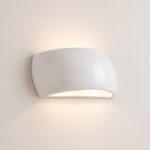
Half-moon white ceramic wall light with gloss finish
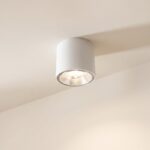
Modern round aluminium ceiling spotlight, GU10
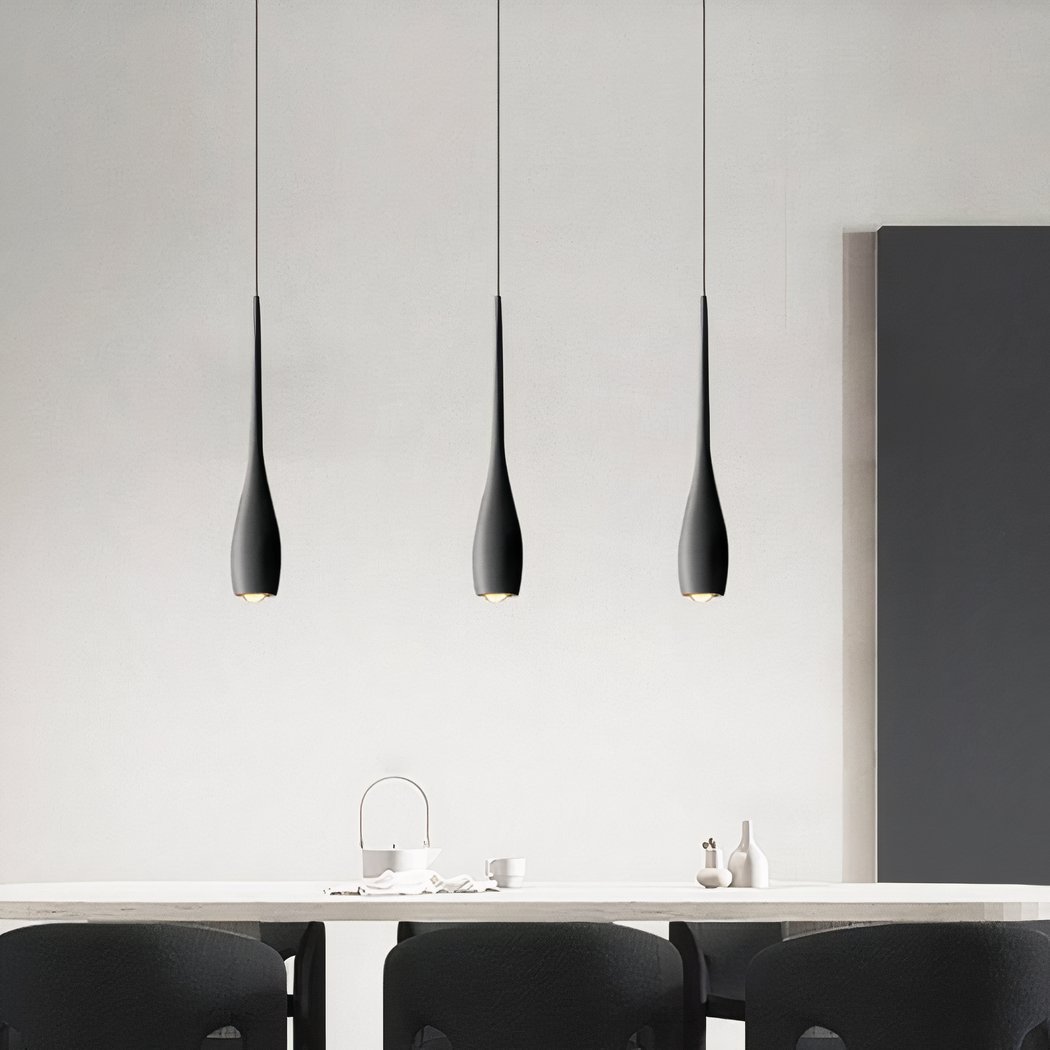
Modern drop-shaped pendant light
See also

Teal Bedroom Ideas: Colours, Gold Accents and the Right Light for a Dark Wall

Downstairs Toilet Lighting: The Right Light for a Small, Windowless WC or Cloakroom

Wabi-Sabi Interior Design: The Beauty of Imperfection, Right Down to the Light
