

Table of Contents
Good office lighting combines three sources: daylight you can control, even general lighting across the room and a task light aimed at your work. Aim for 300 to 500 lux, put the screen at right angles to the window, and choose fittings that neither dazzle you nor reflect in the screen.
Working from home has brought the office into the house: a spare room for some, a corner of the living room or the bedroom for others. Lighting designed for a relaxed evening, though, tires your eyes after a day in front of a screen. This guide uses the benchmarks of real workplaces, the Health and Safety Authority’s guidance on screen work and the European standard EN 12464-1, to help you set the light level, place the desk and choose the right fittings. When you are ready to equip the room, our office lighting range brings them together.
What is the best lighting for an office?
The best office lighting is not one fitting but a balance between three sources, each with its own job.
| Source | Its job | How to provide it |
|---|---|---|
| Daylight | Comfort and the rhythm of the day | A desk at right angles to the window, adjustable blinds |
| General lighting | Lights the whole room and keeps contrasts down | Ceiling light, pendant, uplighter floor lamp |
| Task lighting | Lights the page and the keyboard | Desk lamp, adjustable wall light |
The most common mistake is working with a single desk lamp in a dark room. Your eyes keep moving from a very bright area, the page or the screen, to one that is almost black, and they adapt every time: that constant effort is a source of eye strain. The Health and Safety Authority (HSA) makes the same point for screen work: suitable background lighting is needed to give an appropriate contrast between the screen and its surroundings. So leave the general lighting on, even when the task light is on too.
How much light does an office need?
No rule sets lighting levels for a home office, but workplace references give reliable benchmarks. For screen work, the HSA’s guide to the display screen equipment chapter of the General Application Regulations 2007 says that, as a general rule, 300 to 500 lux should be appropriate. If you need more light to read documents, it recommends local lighting, on one condition: the light from a table lamp must not shine on the screen or the area around it. The same guide asks for all lights to have shades or glare shields.
For offices in general, the European standard EN 12464-1, Light and lighting: lighting of work places, sets 500 lux in the area where the visual task is carried out. For colour, a 2021 review of workplace lighting recommendations notes that a colour rendering index above Ra 80 is the usual advice. Three terms come up on every spec sheet: illuminance, in lux, is the light falling on a surface; glare is rated in offices by the UGR, the unified glare rating, and the lower it is the better; the colour rendering index, or Ra, tells you how faithfully colours look, on a scale up to 100.
To move from lux to the lumens printed on the box, remember that one lux is one lumen per square metre. A desk of 1.5 m² lit to 500 lux must receive at least 750 lumens, which a good desk lamp can deliver on its own. For the whole room, multiply the floor area by the level you want and allow a margin, because part of the light is lost on the walls and ceiling. To turn those lumens into the wattage of an LED bulb, see our lumens to watts chart.
Where should you put the desk and the lights?
Where the desk sits in relation to the window matters as much as the fittings. The HSA’s remote working checklist asks whether the screen is positioned to avoid glare and reflection, for example by sitting at 90 degrees to a window, and its guide to the regulations adds that neither the screen nor the user should face a window. With the window behind you, the sky reflects in the screen; facing it, you are dazzled by the brightness behind the screen.

Three more rules from the same HSA guidance complete the layout:
- Fit blinds you can adjust, to cut the daylight falling on the desk when the sun is low. Horizontal slats let you tilt the light up towards the ceiling rather than onto the screen.
- Do not put the screen directly under a ceiling light. For the greatest comfort, your line of sight should run parallel to the lines of overhead fittings.
- Aim the task light at the page, never at the screen. Put it on the side opposite your writing hand, on the left if you are right-handed, so the shadow of your hand falls beside the page.
Which office light fittings should you choose?
A desk lamp or an adjustable wall light
This is the work light above all others. An articulated arm or a swivelling head lets you aim at the page or the keyboard and correct the angle for each task. When the desk is cluttered, an adjustable wall light frees up the surface: our black wall light with adjustable spot and switch, with a switch on the fitting and a GU10 LED bulb, fixes above the desk and comes on without you getting up. You will find other models among our wall lights with switch.
What makes a good desk lamp?
A few details make the difference day to day. The head should be deep enough to hide the bulb when you are sitting down: if you can see the bulb, it will dazzle you. The arm should hold its position without drooping, and a weighted base or a solid clamp stops the lamp tipping over. A switch within easy reach and a built-in dimmer let you match the light to the time of day. Aim for at least 750 lumens, and if you work on paper, fabric samples or photos, choose a light with a high colour rendering index. The same index decides whether a red wall keeps its colour in the evening, as in a terracotta bedroom.
A reading light for the armchair
If your office has an armchair for reading through documents, a reading light with a flexible head gives precise light without lighting the whole room. Our reading wall light with adjustable head in black steel reaches up to 52 cm from the wall and takes a G9 bulb. All our reading wall lights work on the same principle.
A ceiling light, pendant or floor lamp for general lighting
For the overall light, a diffusing LED ceiling light spreads the light evenly across the room. A pendant suits a meeting table or a work surface with no screen on it; above a monitor, it will reflect in the screen. An uplighter floor lamp, which throws its light at the ceiling, gives a soft light with no reflections, and works best close to the desk.

What colour of light is best for working?
Colour temperature is measured in kelvins (K). During the day, a neutral white of around 4,000 K gives a crisp light that suits work. It is still warmer than daylight and does not replace it: a desk near the window remains your best source by day.
In the evening, switch back to a warm white of 2,700 to 3,000 K. It also keeps grey walls from looking dull, as our guide what colour goes with grey explains. The reason is biological. In 2022, sleep and circadian researchers published consensus recommendations for indoor light, measured at eye level in the unit that reflects its effect on the body clock: at least 250 lux of it during the day, then no more than 10 lux from three hours before bedtime. Warm white bulbs, dimmed, keep you well under that evening limit. Bulbs with adjustable colour temperature let you move from one white to the other through the day.
How to avoid eye strain: glare, contrast and flicker
- Glare: a light source you can see in your field of vision, a bare bulb or a badly aimed spot. Choose fittings that hide the source behind a diffuser, an opal glass or a deep head.
- Contrast: a powerful desk lamp in a dark room. Keep the general lighting on and avoid a very bright screen in the dark.
- Flicker: some LED bulbs, especially cheap ones or those on an incompatible dimmer, vary in brightness very quickly, which some people find tiring. Buy good quality bulbs and check that the bulb and the dimmer switch are compatible.
Our LED wall lights spread their light over the wall, which lifts the brightness of the room and softens the contrast around the screen.
Home office lighting: three common set-ups
A desk in the living room or the bedroom. Mark out the work area without lighting the whole room like an open-plan office: a desk lamp or an adjustable living room wall light for the work, the room’s usual lighting for the rest. Switching off the work light in the evening also marks the end of the working day.
A dedicated room. Apply the workplace benchmarks in full: screen at right angles to the window, adjustable blinds, a ceiling light or uplighter for the room and a task light on the desk. A minimalist pendant light over a side table rounds it off without reflecting in the screen.
A windowless room or an attic office. With no daylight, the general lighting must be even. Use several sources rather than one powerful fitting, and favour indirect light that bounces off the ceiling and walls: the room feels larger. Our ceiling lights include flat and spotlight models suited to a low attic ceiling.
Adding lights to a home office in Ireland
A desk lamp or a floor lamp that plugs into an existing socket needs no electrician. Wiring is another matter. Most electrical work in an Irish home is classed as Restricted Electrical Works under S.I. No. 264 of 2013: it can only be carried out, and must be certified, by a Registered Electrical Contractor. That includes installing a new circuit, for example a lighting circuit for a converted attic office, and any work on the distribution board. Minor works, such as moving a light fitting without affecting the circuit, fall outside that category. When a Registered Electrical Contractor finishes a job, they must give you a Completion Certificate confirming the work meets the National Rules for Electrical Installations, I.S. 10101. Check the contractor is on the Safe Electric register before you book.
Office lighting: frequently asked questions
What kind of lighting is best for an office?
A mix of three sources: daylight falling from the side of the screen, even general lighting from a ceiling light or an uplighter, and a task light aimed at your work. Keep the general lighting on when the desk lamp is on, so your eyes are not constantly adapting between a bright desk and a dark room.
How many lux do you need for an office?
For screen work, the Health and Safety Authority’s guidance gives 300 to 500 lux as a general rule, with local lighting added if you need more light to read documents. The European workplace lighting standard, EN 12464-1, sets 500 lux in the area where the task is carried out.
Where should a desk go in relation to the window?
At right angles to the window, so daylight falls from the side. With the window behind you, it reflects in the screen; facing it, the bright sky behind the screen dazzles you. Adjustable blinds let you cut the daylight when the sun is low.
What colour temperature is best for a home office?
A neutral white of around 4,000 K suits work during the day. In the evening, switch to a warm white of 2,700 to 3,000 K, because bluish light late in the day acts on the body clock. Bulbs with adjustable colour temperature let you move from one to the other.
How many lumens do you need for a desk lamp?
One lux is one lumen per square metre, so a desk of about 1.5 m² lit to 500 lux needs at least 750 lumens reaching its surface. A good desk lamp can provide that on its own.
How do I make my office lighting better?
Add the missing layer first: most home offices have either a ceiling light with no task light, or a desk lamp in a dark room. Then move the desk so the window is at the side, keep lights out of the screen’s reflection, hide bare bulbs behind shades and use warm white in the evening.
Sources
- Guide to the Safety, Health and Welfare at Work (General Application) Regulations 2007, Chapter 5 of Part 2: Display Screen Equipment, lighting and reflections and glare. Health and Safety Authority
- Occupational Safety and Health Guidance on Remote Working: Checklist, April 2023. Health and Safety Authority
- Restricted and Controlled Electrical Works, and Completion Certificates, guidance for customers. Safe Electric
- Brown T. M. et al., Recommendations for daytime, evening, and nighttime indoor light exposure to best support physiology, sleep, and wakefulness in healthy adults, PLOS Biology, 2022. doi.org
- Sikora R., Korzeniewska E., The privacy and safety paradox regarding technical compliance and employer enforcement of home office lighting requirements, Scientific Reports, 2026. doi.org
Related products
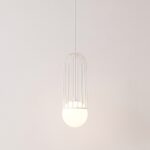
Minimalist metal cage pendant light with opal glass globe
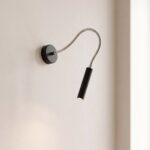
Reading wall light with adjustable head in black steel
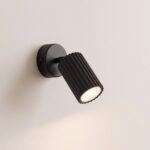
Black ribbed adjustable spotlight wall light with switch
See also

Flickering Lights: Causes, Warning Signs and How to Fix Them

Bookcase Lighting: How to Light Your Books, Shelves and Reading Nook

How Many Lumens Do I Need? Lumens per m² for Every Room
