After spotting the style you like, you need to move to the practical side to avoid choosing the wrong model.
Determine the ideal length according to the volume
The ceiling height dictates your choice. A tube that is too long will overwhelm the room’s volume. Let the circulation space breathe. Always measure from the floor to the base.
Adapt the tube to your table. For an island, aim for two-thirds of the length. This ensures visual harmony without overflowing. The result will then be perfectly balanced.
Choose a format proportional to the furniture. Avoid violent size contrasts. A small tube on a huge table will disappear. The balance of masses is essential here.
Select robust and aesthetic materials
Compare brushed metal, brass and aluminium. Each finish brings its own character. Brass warms the atmosphere. Aluminium underlines a raw, industrial modernity.
Evaluate the quality of the diffusers. Opal glass diffuses a soft light. Polycarbonate is more resistant to daily knocks. It is a strategic choice for high-traffic areas.
Think about surface maintenance. Matt finishes mask fingerprints. A simple soft cloth is enough for cleaning. Check accessibility before fixing your light fixture.
Check the LED technology and colour temperature
Distinguish between integrated LEDs and interchangeable bulbs. Integrated LEDs allow for very slim designs. The bulb offers total replacement freedom. It is a question of long-term durability.
Choose the right colour temperature. Warm white creates a cosy atmosphere. Neutral white energises your workspaces. Never mix different colour temperatures together.
Control the colour rendering index. A high CRI respects the shades of your decoration. This is vital to avoid dulling your objects. Aim for an index above eighty.
The advantages of cylindrical lighting by room
Once the technical criteria are validated, let’s see how these tubes integrate concretely into your daily life.
Optimise brightness in the kitchen
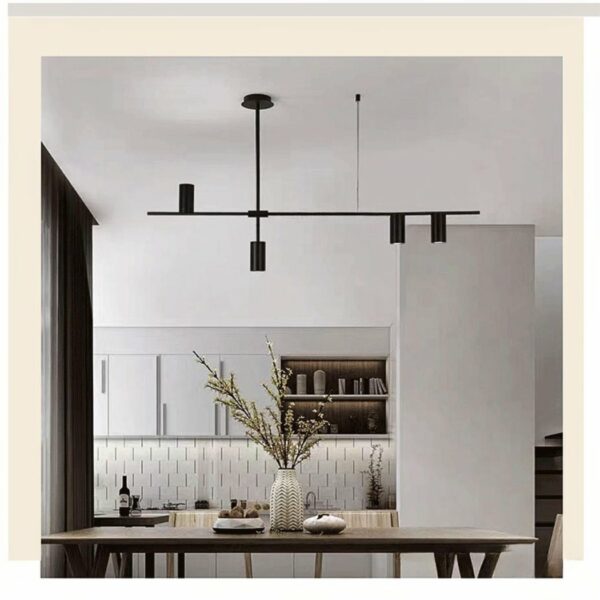
Install tubular pendant lights above the island. This aligned arrangement creates a strong visual rhythm. It defines the preparation space without partitioning. It is the preferred solution of current interior architects.
Guarantee a direct light flow. The tube projects the light exactly where you are working. No shadow zone hinders cutting. Precision is total.
Give preference to simple structures. Cleaning becomes child’s play. A quick wipe is enough on these smooth surfaces.
Think about energy efficiency. LED tubes consume very little. You can light your worktop without worry.
Create a soothing atmosphere in the bedroom
Use vertical wall lights as bedside lamps. This frees up space on your nightstands. The result is ultra-modern and original. It is a clever space saver.
Play with indirect diffusion. Orient the tube towards the wall to soften the atmosphere. This avoids unpleasant glare upon waking. The light becomes a soothing visual caress. Comfort is immediate.
Harmonise the structure with the furniture. Black metal often matches the bed legs. Wood adds extra softness.
Think about well-being. Well-designed lighting helps you fall asleep. The vertical tube gently structures the space.
3 finishes adapted to every interior decor
The choice of material radically transforms the visual impact of your light fixture on the overall atmosphere.
Black metal for an industrial feel
Associate matte black with raw concrete. This contrast reinforces the desired ‘factory’ look. It is a highly effective marriage of textures. The result is raw and authentic.
Emphasise the architectural lines of a loft. The black tube acts like a pencil stroke in the space. It defines volumes with great precision. It is perfect for a sober office.
Add visible textile cables. This detail brings an artisan feel. Black remains a safe bet. It never really goes out of fashion.
Golden brass for a touch of luxury
Integrate gold into a contemporary living room. Brass immediately brings a precious shine. It attracts the eye without being flashy. It is a very subtle elegance.
Bring warmth with metallic reflections. Light bounces off the brass and warms up. This creates a welcoming and rich atmosphere. It is ideal for winter evenings.
Combine gold with dark shades. Midnight blue or pine green enhance the metal. The contrast is noble and deep. It is a bold choice.
Clear glass for visual lightness
Give preference to transparency in small spaces. Glass does not block the view. The room seems larger and airier. It is a classic decorating trick.
Showcase filament bulbs. The glass tube becomes a showcase for the light source. You admire the internal design of the bulb. It is a highly appreciated vintage style.
Facilitate three hundred and sixty-degree diffusion. Light escapes everywhere without obstacle. The lighting is global and generous. It is perfect for a dark entrance.
The key styles of tubular light fixtures
To finish, let’s explore the aesthetic trends that currently dominate the cylindrical light fixture market.
Scandinavian minimalism with clean lines
Nordic design refuses the superfluous. Every curve has a precise function. We seek the perfect balance between the object and its light. It is a calm beauty, carried by simple geometric shapes.
White, light grey or wood dominate. Textures are soft to the touch. This instantly soothes your interior decor. The use of neutral colours reinforces this visual serenity.
No useless artifice here. The light is pure and direct. Luminous efficacy is thus fully valued.
Neo-retro design and fluted tubes
The fluting diffracts light with elegance. This creates magnificent shadow plays on the walls. The result is very textured. The effect of striated glass brings unprecedented depth.
This style is making a strong comeback in our homes. It mixes nostalgia and technical modernity. It is a homage to the chic of yesteryear. We love this timeless side reminiscent of the aesthetics of the thirties.
The aged metal details complete the look. The whole is coherent and refined. These worked fixings give a high-end finish.
Our tube lights in detail
Our tube lights cover all types of fittings: pendant lights and wall lights make up nearly a third each, ceiling lights about a fifth and chandeliers most of the rest. Metal is used on more than half of the models, followed by aluminium, wood and concrete, and black dominates, ahead of white and gold. The style is mostly modern and minimalist, sometimes industrial. Examples: the industrial glass tube pendant light, the metal tube ceiling spotlight in 2 colours and the pendant light with raw concrete tubes on a bar.
GU10 is by far the most common fitting, followed by G9, integrated LED and E27, and most models are sold without bulbs. Nearly three quarters ship from our warehouse in Poland, the rest from China. Which tube light for which room? Ceiling tube spotlights for a kitchen or a hallway, a row of tube pendant lights above the island or the dining table, and vertical wall tube lights beside the bed.
See also: tube ceiling lights.
Frequently asked questions about tube lights
Are your tube lights fluorescent tubes?
No. Our tube lights are tube-shaped light fittings: most take GU10, G9 or E27 LED bulbs, some have integrated LED, and only a few use a T8 tube.
Which bulbs do tube light fittings take?
Nearly half of our tube lights take GU10 bulbs. The product page states the fitting and whether a bulb is included; most models are sold without bulbs.
Can a tube light be fitted on the ceiling or on the wall?
Both: about a fifth of our tube lights are ceiling lights, including tube spotlights, and nearly a third are wall lights. Ask a qualified electrician for a hardwired connection.

 142,72€ instead ofAdd to cart - 167,90€ This product has multiple variants. The options may be chosen on the product page


 from 171,28€ instead ofAdd to cart - 201,50€ This product has multiple variants. The options may be chosen on the product page


